How do adaptogens work? The QuietTone blend explained

Updated September 2026 · reviewed by the QuietTone Research Team. We are an independent information resource, not a medical provider, and this article is educational rather than medical advice.
Adaptogens are a class of herbs and plants traditionally used to help the body adapt to everyday stress and return more comfortably to a steady baseline. The leading idea is that they work by gently supporting the body's own stress-response system rather than forcing it in one direction — and two of the most-studied examples, ashwagandha and rhodiola, sit at the heart of the QuietTone botanical blend. This guide explains the thinking in plain language, and stays honest about where the evidence is strong and where it is still early.
How adaptogens are thought to work, and how QuietTone uses them, in one place.
- The core idea
- Adaptogens are believed to help balance the body's stress-response system (the HPA axis) so it recovers more smoothly, rather than acting like a fast stimulant or sedative.
- Best-studied herbs
- Ashwagandha and rhodiola have the most human research for perceived stress and fatigue — both are in QuietTone.
- How the effect feels
- Subtle and cumulative: most people look at several weeks of daily use, not a single dose.
- Honest evidence
- Promising but not definitive. Studies are often small, so this is early science, not a cure for anything.
The word “adaptogen” is everywhere in wellness right now, and the plain meaning is easy to lose behind the marketing. Below we cover what the term describes, the traditional mechanism people point to, and how the adaptogens in QuietTone fit — as general education, not a health claim.
What are adaptogens, exactly?
An adaptogen is a plant or herb traditionally used to help the body resist and recover from everyday physical and mental stress without over-stimulating or sedating it. The term is not ancient — it was coined by Soviet scientists in the late 1940s for substances that seemed to raise the body's non-specific resistance to stressors. Long before that label, many of these same plants were staples of Ayurvedic and traditional Chinese practice.
What qualifies a herb as an adaptogen?
In the traditional framework, a true adaptogen is expected to do three things: be broadly safe and non-toxic in normal amounts, help the body cope with a wide range of stressors rather than one specific problem, and have a “normalising” effect — nudging an over-revved system down and an under-functioning one up. That last idea, sometimes called a bidirectional or balancing action, is the signature claim that sets adaptogens apart from ordinary stimulants or relaxants.
Which herbs are considered adaptogens?
The classic shortlist includes ashwagandha, rhodiola, holy basil (tulsi), eleuthero (Siberian ginseng), Asian ginseng, schisandra and certain functional mushrooms such as reishi and cordyceps. Not every plant marketed as an adaptogen has strong research behind it, which is exactly why it helps to look at the best-studied ones — the two that anchor QuietTone.
How do adaptogens work in the body?
The leading explanation is that adaptogens work by supporting the body's central stress-response network — the hypothalamic-pituitary-adrenal (HPA) axis — so that stress hormones like cortisol rise and fall in a steadier, more measured way. Instead of switching one system on or off like caffeine or a sedative, adaptogens are thought to buffer the extremes, helping the body reach a calmer equilibrium after a stressor passes.
What is the HPA axis, in plain terms?
The HPA axis is the communication loop between your brain and your adrenal glands that governs the stress response. When you face a demand — a deadline, a loud environment, a poor night's sleep — this loop releases cortisol and other hormones to help you meet it. The problem is that modern stress is often low-grade and constant, so the system can stay switched on. The adaptogen hypothesis is that these herbs help the loop reset more efficiently, so the “off” signal arrives on time.
Why do the effects feel subtle?
Because adaptogens are thought to support a regulatory system rather than override it, the experience is usually gentle and cumulative — rarely the dramatic “kick” of a strong coffee. Traditional use and modern studies both point to a build-up over days and weeks, which is why consistency matters far more than any single serving.
Meet QuietTone's two adaptogens: ashwagandha and rhodiola
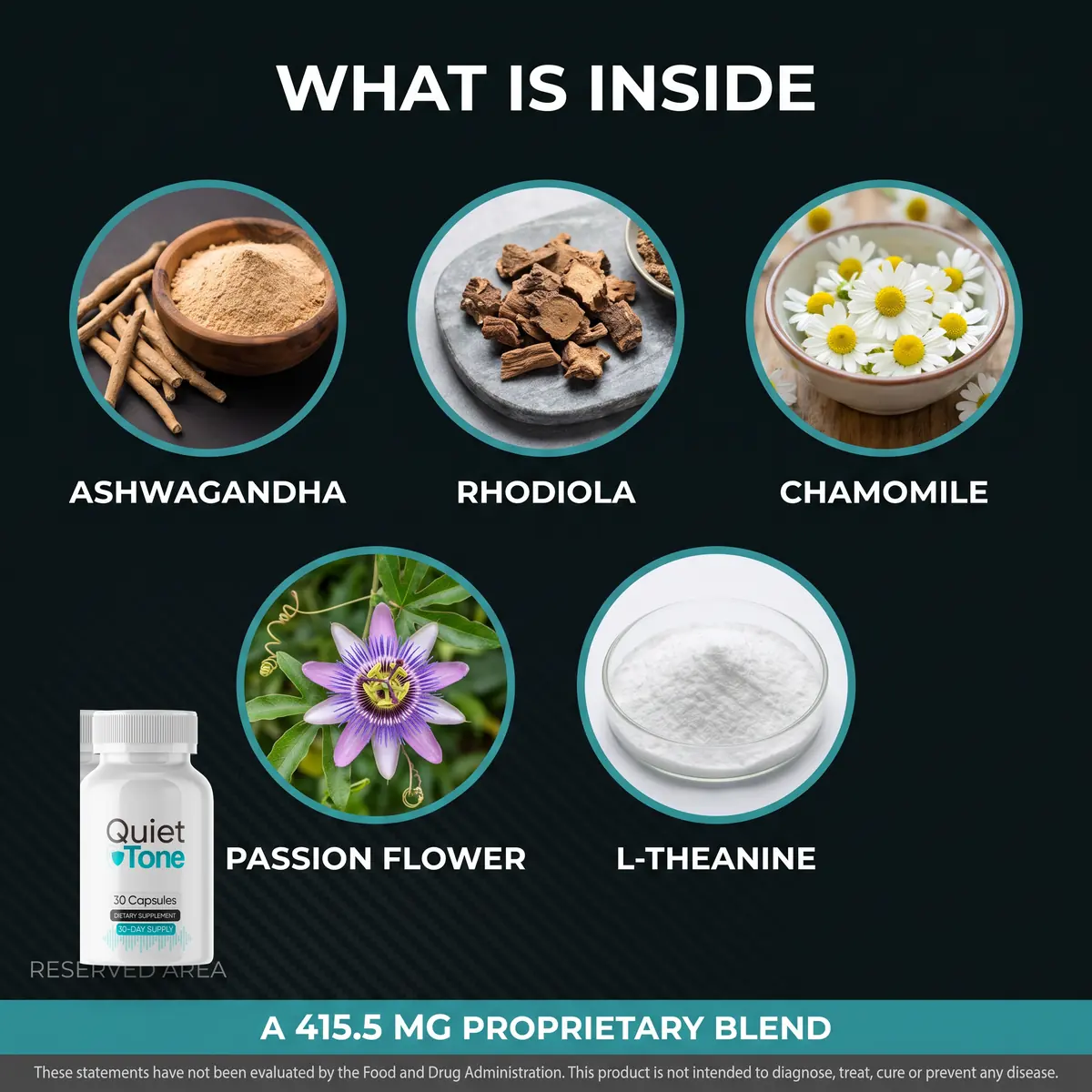
QuietTone leans on the two adaptogenic herbs with the deepest research base — ashwagandha and rhodiola — because a formula is only as credible as the evidence behind its parts. Each brings a slightly different traditional character, and together they illustrate the adaptogen idea nicely.
How is ashwagandha traditionally used?
Ashwagandha (Withania somnifera) is a cornerstone of Ayurvedic medicine, used for centuries as a “rasayana,” or rejuvenating tonic, associated with calm and everyday resilience. In modern research it is the most-studied adaptogen for perceived stress, and independent bodies such as the U.S. National Center for Complementary and Integrative Health describe a promising but still-developing evidence base. It is the “grounding” adaptogen — more soothing than stimulating.
How is rhodiola traditionally used?
Rhodiola (Rhodiola rosea) is a hardy arctic root long used across Scandinavia and Russia to combat fatigue and sustain stamina in demanding periods. Where ashwagandha leans calming, rhodiola is the more “energising” adaptogen, reached for when mental tiredness sets in. Pairing the two is a classic combination: one to settle, one to sustain. The activating half gets a closer look in our profile of rhodiola in QuietTone.
| Adaptogen | Origin / tradition | Traditional character |
|---|---|---|
| Ashwagandha | Ayurvedic (India) | Grounding tonic linked with calm and everyday stress resilience. |
| Rhodiola | Scandinavian & Russian folk use | Energising root associated with combating fatigue and sustaining focus. |
| Holy basil (tulsi) | Ayurvedic (India) | Sacred herb traditionally used to promote a balanced, settled mood. |
| Eleuthero | Traditional Chinese / Russian | Classic “stamina” adaptogen used during periods of exertion. |
See the exact dose in QuietTone →
What does the science actually say?
The honest summary is that adaptogen research is growing and encouraging, but not yet definitive. Ashwagandha and rhodiola have the most human trials for perceived stress and fatigue, yet many studies are small, short, or industry-funded, so respected reviewers call the evidence promising rather than proven. Where the science is early, we say so. A 2021 review of plant adaptogens in Nutrients traces the term to mid-20th-century Soviet research and notes that the pharmacology is still being assembled (Todorova 2021, PMID 34445021).
How strong is the evidence, herb by herb?
The table below sketches where each ingredient stands, using the cautious language independent summaries such as Examine.com and NCCIH tend to use. It describes general and traditional use, not a promise of results for any individual.
| Ingredient | Most-discussed use | Evidence maturity |
|---|---|---|
| Ashwagandha | Perceived stress, calm | Most-studied adaptogen; promising human data, still developing. |
| Rhodiola | Mental fatigue, stamina | Several small human trials; encouraging but not definitive. |
| L-theanine | Relaxed alertness | Reasonable human research for a calm-focus feeling. |
| Chamomile & lemon balm | Wind-down, relaxation | Long traditional use; modest, mostly small studies. |
None of this means adaptogens are magic, or that they treat, cure or prevent any disease. It means these are well-tolerated botanicals with a plausible mechanism and a real, if early, research trail — a sensible foundation for a daily calm-and-wellness routine. For a deeper head-to-head, see our comparison of ashwagandha vs rhodiola in QuietTone.

See the adaptogen blend in one capsule
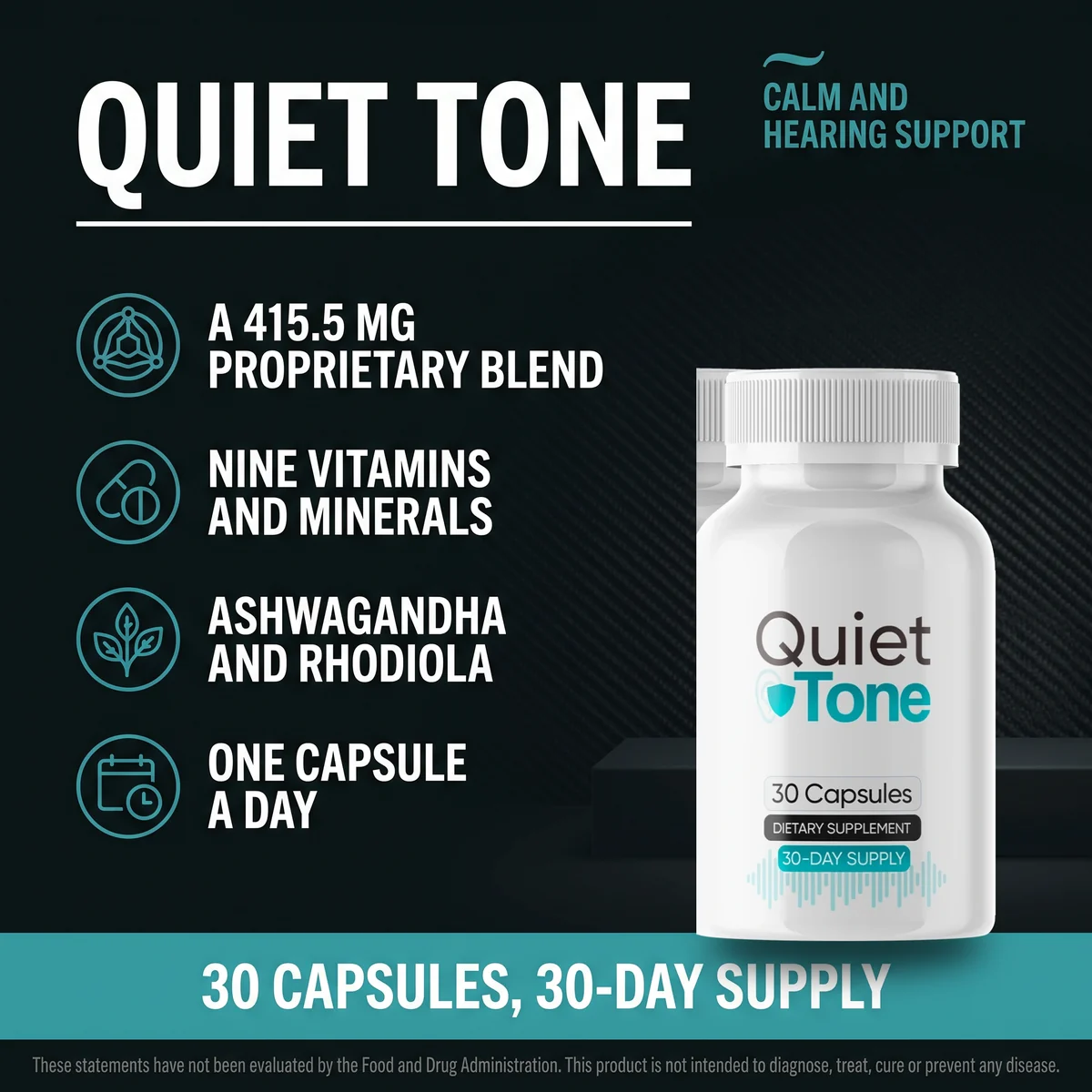
QuietTone pairs ashwagandha and rhodiola with calming companions in a 415.5 mg blend, plus nine vitamins and minerals, in a single once-daily capsule. The six-bottle bundle is the best value at $49 per bottle, with free U.S. shipping and a 60-day guarantee.
Check today's QuietTone pricing — from $49/bottleHow does QuietTone put adaptogens to use?
QuietTone's approach is to combine two adaptogens with a set of traditional calming botanicals and supportive nutrients, so the formula reflects the whole stress-and-wellness picture rather than a single herb. The adaptogenic pair — ashwagandha and rhodiola — sits inside a 415.5 mg proprietary blend with chamomile, lemon balm, GABA and L-theanine, alongside nine vitamins and minerals, in one once-daily capsule.
Why combine adaptogens with other calming botanicals?
The logic is simple: adaptogens are believed to support the longer-term balance of the stress system, while gentler botanicals like chamomile and L-theanine are traditionally linked with a more immediate sense of calm. Blending them covers both the cumulative side of stress resilience and the everyday wind-down. Read how each part is used in our notes on ashwagandha in QuietTone and the full ingredients section.
How should you take an adaptogen like this?
Because the effect is cumulative, the most important rule is consistency. QuietTone is one capsule a day, ideally at the same time — many people take it with water before a meal. Adaptogens are traditionally used in cycles of several weeks, which is why a multi-month supply tends to make more practical sense than a single bottle.

Are adaptogens safe, and who should be careful?
For most healthy adults, well-known adaptogens such as ashwagandha and rhodiola are considered well tolerated at sensible amounts, but “natural” never means “right for everyone.” Some people should be cautious or avoid them entirely, and a short conversation with a doctor is the safest way to decide.
When should you talk to a doctor first?
Speak with a qualified healthcare professional before starting any adaptogen — QuietTone included — if you are pregnant or nursing, under 18, taking any medication, or living with a diagnosed condition. Ashwagandha in particular is often flagged for people with thyroid or autoimmune conditions, and rhodiola can interact with certain medications. When in doubt, ask.
What realistic expectations should you set?
Set the bar where the evidence sits: adaptogens are a supportive part of a stress-resilience routine, not a treatment and not a guarantee. Pair them with the basics that do the heavy lifting — steady sleep, movement, whole foods and lower noise exposure — and think in weeks, not hours. Our guide to lowering everyday stress naturally covers those foundations.
Frequently asked questions
What are adaptogens in simple terms?
Adaptogens are a category of plants and herbs traditionally used to help the body cope with everyday stress and return more easily to a steady baseline. The term was coined in mid-20th-century research, and the best-studied examples include ashwagandha and rhodiola. They are foods and botanicals, not drugs, and they support routines rather than treating disease.
How do adaptogens work in the body?
The leading idea is that adaptogens gently nudge the body's stress-response system — the HPA axis and stress hormones like cortisol — toward balance rather than pushing it in one fixed direction. Much of this thinking comes from traditional use and early research, so effects are typically subtle and build over weeks rather than acting like a fast-onset stimulant or sedative.
Is there real science behind adaptogens?
There is a growing but still developing body of research. Ashwagandha and rhodiola have the most human studies for perceived stress and fatigue, and independent summaries such as those on NCCIH and Examine.com describe promising but not definitive evidence. Study sizes are often small, so it is honest to call the science early rather than settled.
What adaptogens are in QuietTone?
QuietTone's proprietary 415.5 mg botanical blend features two classic adaptogens, ashwagandha and rhodiola, alongside calming companions such as chamomile, lemon balm, GABA and L-theanine. The blend is paired with nine vitamins and minerals in a single once-daily capsule, so you can see the exact line-up in the ingredients section.
How long do adaptogens take to work?
Traditional use and modern studies both suggest adaptogens build gradually, with most people looking at a window of several weeks of consistent daily use rather than a single dose. Because the support accumulates, many people choose a multi-month supply so their routine is not interrupted. Individual results vary.
Are adaptogens safe for everyone?
Adaptogenic herbs are generally well tolerated by healthy adults, but they are not right for everyone. If you are pregnant or nursing, under 18, take medication, or have a diagnosed condition such as a thyroid or autoimmune disorder, talk with your doctor before starting any adaptogen, including QuietTone.
Try QuietTone's adaptogen blend risk-free for 60 days →
QuietTone is a dietary supplement, not a treatment for any medical condition. These statements have not been evaluated by the Food and Drug Administration. This product is not intended to diagnose, treat, cure or prevent any disease. Always consult a qualified healthcare professional about your individual needs.
References & further reading
- National Center for Complementary and Integrative Health (NCCIH). Ashwagandha. nccih.nih.gov/health/ashwagandha
- National Center for Complementary and Integrative Health (NCCIH). Rhodiola. nccih.nih.gov/health/rhodiola
- Todorova V, et al. Plant adaptogens — history and future perspectives. Nutrients, 2021. PMID 34445021
- Examine.com. Ashwagandha — evidence-based summary. examine.com/supplements/ashwagandha
- Examine.com. Rhodiola rosea — evidence-based summary. examine.com/supplements/rhodiola-rosea
- MedlinePlus / U.S. National Library of Medicine. Ashwagandha. medlineplus.gov/druginfo/natural/953.html
These references describe the ingredients and habits in general terms and do not constitute evidence that any product treats, cures or prevents any condition.
Keep reading: ashwagandha vs rhodiola in QuietTone · how to lower everyday stress naturally · the QuietTone review · back to the QuietTone blog.