How to lower everyday stress naturally, with QuietTone

Updated September 2026 · reviewed by the QuietTone Research Team. We are an independent information resource, not a medical provider, and this article is educational rather than medical advice.
To lower everyday stress naturally, you build a handful of small, repeatable habits — steady sleep, daily movement, slow breathing and balanced nutrition — that settle the nervous system a little more each day. This guide walks through exactly how to do that, where evidence is strong and where it is thin, and how a calm-support blend like QuietTone fits a lower-stress routine.
How to lower low-grade daily stress, in plain terms.
- The short version
- Lower everyday stress naturally by stacking small habits — consistent sleep, regular movement, slow breathing and balanced meals — that nudge your nervous system toward calm over weeks, not minutes.
- In the moment
- Slow, extended-exhale breathing for one to three minutes is the fastest self-directed way to calm down.
- Over time
- Sleep, movement and magnesium-rich food build the calm baseline everything else rests on.
- Extra support
- Adaptogens such as ashwagandha and rhodiola are traditionally used to support stress resilience.
- The bottom line
- These habits support a calmer baseline — they are not a treatment for anxiety or any medical condition.
Low-grade daily stress rarely arrives as a single dramatic event. It accumulates — a poor night’s sleep, a skipped lunch, a full inbox, a noisy commute — until a tense baseline starts to feel normal. The good news is that the same slow accumulation works in reverse: small, repeatable habits gradually lower where your stress sits. Below is a practical order to build them in, and where a formula like QuietTone can play a supporting role.

Why does everyday stress build up in the first place?
Everyday stress is your body’s normal response to demand, and it becomes a problem mainly when it never fully switches off. Your nervous system has two broad modes: a “go” state that mobilises energy for a challenge, and a “rest” state that lets you recover. Short bursts of the go state are healthy. Trouble starts when back-to-back demands — screens, deadlines, disrupted sleep, background noise — keep you idling in it, so recovery never quite happens.
What does chronic low-grade stress feel like?
Chronic low-grade stress is the quiet, persistent tension you stop noticing because it feels like your normal setting. It often shows up as a short fuse, trouble winding down at night, tense shoulders and jaw, and a sense that small tasks feel bigger than they are. For people sensitive to ear noise, a wound-up nervous system can also make ringing harder to ignore, which is one reason calm and hearing wellness are so often discussed together.
Why treat it with habits instead of willpower?
Willpower is a poor tool for something that runs all day, because it depends on attention you do not always have. Habits work better because they lower stress in the background: once a wind-down routine or a lunchtime walk becomes automatic, it keeps paying off on the days you feel too frazzled to think about it. The aim is not to eliminate stress but to lower your resting level so you have more room before you tip over.
How do you lower stress naturally, step by step?
The most reliable way to lower stress naturally is to build foundational habits in order of leverage, starting with sleep and adding from there. You do not need all of them at once; pick one, make it routine, then stack the next. The table below ranks the highest-leverage habits and what a realistic first step looks like.
| Habit | Why it lowers stress | Realistic first step |
|---|---|---|
| Consistent sleep | Recovery time your nervous system needs to reset each day. | Same wake time daily, screens off 45 min before bed. |
| Daily movement | Burns off stress chemistry and improves mood and sleep. | A 10–20 minute walk, ideally outdoors. |
| Slow breathing | Directly shifts the body toward its rest state. | Inhale 4, exhale 6, for 2 minutes when tension rises. |
| Balanced meals | Steady blood sugar and key minerals steady mood. | Protein and fibre at each meal; do not skip lunch. |
| Boundaries on inputs | Fewer alerts and less noise mean fewer stress triggers. | Notification-free blocks and quieter spaces. |
Step 1: Protect your sleep first
Sleep is the single highest-leverage stress habit because almost everything else gets harder when it is short. A regular schedule — especially a consistent wake time — anchors your body clock, and a simple wind-down tells your nervous system the day is closing. If you fix only one thing, fix this. If the trouble is specifically that your thoughts speed up at lights-out, see how to calm a racing mind at night.
Step 2: Move your body most days
Regular movement is one of the best-studied ways to lower stress and lift mood, and it does not require a gym. A brisk daily walk, some light strength work or anything you will actually repeat helps metabolise the day’s stress chemistry and improve sleep that night. Outdoor movement adds daylight and a change of scene too.
Step 3: Learn one breathing tool
Slow breathing is the fastest self-directed way to calm down because it works on the nervous system in real time. Extending your exhale — for example, in for four counts and out for six — gently activates the rest state within a minute or two, and gets easier to reach for with daily practice. NCCIH's summary of relaxation techniques rates breathing and related practices as safe for most people, with real but modest benefits (NCCIH).

See the exact dose in QuietTone →
Which nutrients and adaptogens help lower stress?
The nutrients most linked with a calmer baseline are magnesium and the B-vitamins, alongside traditionally used adaptogens such as ashwagandha and rhodiola. None of them is a sedative or a cure; they support the ordinary machinery of a settled nervous system, which is why they pair naturally with the sleep-and-movement foundation above.
| Nutrient / botanical | Role in a calm routine | Evidence note |
|---|---|---|
| Magnesium | Contributes to normal nervous-system and psychological function. | Well established as essential; many people under-consume it. |
| B-complex | Supports energy metabolism and reduces tiredness and fatigue. | Recognised roles; deficiency worsens how stress feels. |
| Ashwagandha | Adaptogen traditionally used for stress resilience. | Some human trials report lower perceived stress; still developing. |
| Rhodiola | Adaptogen used for resilience and steady energy. | Mixed but promising human data; quality varies. |
| L-theanine | Amino acid associated with calm, alert focus. | Modest evidence for a relaxed-yet-alert state. |
Why magnesium is the calm-baseline mineral
Magnesium is an essential mineral involved in hundreds of processes, including nervous-system and psychological function, and shortfalls are common. It is best obtained from food — leafy greens, nuts, seeds, legumes and whole grains — with a sensible supplement to fill gaps. It is not a knockout drug; it simply helps keep the everyday foundation of calm in place.
Do adaptogens for stress really work?
Adaptogens are plants traditionally used to help the body cope with demand without tipping into fatigue, and ashwagandha and rhodiola are the best known. Some human studies report reductions in perceived stress, but the evidence base is still developing and product quality varies. Treat them as reasonable support for a calm routine, not a guaranteed fix or a substitute for care you actually need.

Support your calm baseline with one capsule a day
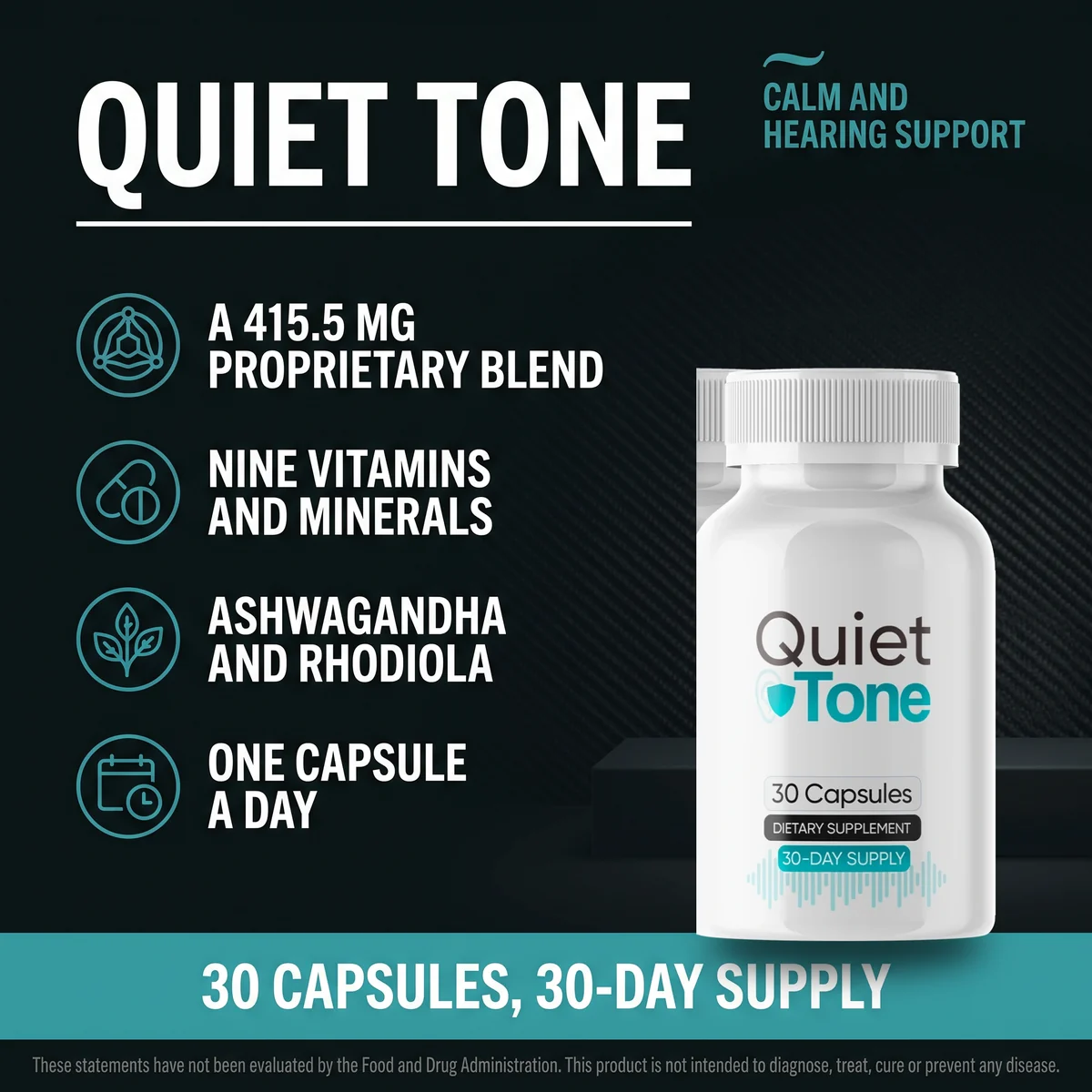
QuietTone combines nine vitamins and minerals with the full 415.5 mg botanical blend — ashwagandha, rhodiola, chamomile, lemon balm, GABA and L-theanine. The six-bottle bundle is the best value at $49 per bottle, with free U.S. shipping and a 60-day guarantee.
Check today’s QuietTone pricing — from $49/bottleWhere does QuietTone fit into a lower-stress routine?
QuietTone is a once-daily supplement designed to sit alongside stress habits, not replace them. It pairs nine vitamins and minerals — including magnesium and the B-complex — with a 415.5 mg proprietary blend of ashwagandha, rhodiola, chamomile, lemon balm, GABA, L-theanine and more, in one non-GMO vegetable capsule made in an FDA-registered facility. The idea is simple: cover several of the calm-baseline nutrients in a single step so the routine is easy to keep.
How to use it as part of the plan
Used well, a supplement is the smallest brick in the wall — helpful, but only next to sleep, movement and breathing. Take one capsule a day with water at a consistent time, keep your sleep and walking habits going, and give it a fair, uninterrupted run before you judge it. You can see the transcribed panel in the ingredients section, or read our companion guides on magnesium for the nervous system and ears and ashwagandha for calm and hearing.
How long until natural stress habits work?
In-the-moment tools can help within minutes, while foundational habits compound over weeks. Slow breathing calms you almost immediately; better sleep, regular movement and steadier nutrition tend to show up over roughly two to eight weeks of consistency. Supplements, too, are best judged over a month or two. The through-line is patience: a calmer baseline is a slow average, not an overnight switch.
What results are realistic — and what are not?
Realistically, most people can expect to feel a little more even, sleep a little better and recover from stressful moments a little faster once the habits stick. What is not realistic is a supplement or a single technique erasing stress, replacing sleep, or treating anxiety or any medical condition. If stress is severe or affecting your health, that is a conversation for a qualified professional, not a blog post.
Frequently asked questions
How can I lower stress naturally without medication?
Build a few small daily habits: keep a consistent sleep schedule, move your body most days, breathe slowly for a couple of minutes when you feel tension rise, and eat regular, balanced meals. Consistency matters more than intensity, and these habits support a calmer baseline rather than treat any condition.
What is the fastest natural way to calm down in the moment?
Slow, extended-exhale breathing is the quickest self-directed tool most people have. Breathing in for about four counts and out for six, for one to three minutes, gently shifts the nervous system toward a rest state. A short walk or a few minutes outside can add to the effect.
Do adaptogens like ashwagandha actually reduce stress?
Adaptogens such as ashwagandha and rhodiola are traditionally used to support stress resilience, and some human studies report reductions in perceived stress. The evidence base is still developing and results vary, so they are best seen as support for a calm routine, not a guaranteed fix or a treatment for any disease.
Does magnesium help with stress and sleep?
Magnesium is an essential mineral that contributes to normal nervous-system and psychological function, and many people fall short of the recommended intake. Getting enough from food or a sensible supplement supports the everyday foundation of calm, though it is not a sedative and will not override poor sleep habits.
How does QuietTone help lower everyday stress?
QuietTone pairs nine vitamins and minerals, including magnesium, with a 415.5 mg blend of calming botanicals such as ashwagandha, rhodiola, chamomile, lemon balm, GABA and L-theanine, in one daily capsule. It is designed to support a calmer baseline alongside good sleep, movement and stress habits — not to treat any condition.
How long does it take for natural stress habits to work?
In-the-moment tools like slow breathing can help within minutes, while foundational habits such as sleep, movement and nutrition tend to compound over two to eight weeks. Give any new routine, including a supplement, a consistent month or two before judging how it fits your day.
Try QuietTone risk-free for 60 days →
QuietTone is a dietary supplement, not a treatment for any medical condition. These statements have not been evaluated by the Food and Drug Administration. This product is not intended to diagnose, treat, cure or prevent any disease. Always consult a qualified healthcare professional about your individual needs.
References & further reading
- National Center for Complementary and Integrative Health (NCCIH). Relaxation Techniques: What You Need To Know. nccih.nih.gov/health/relaxation-techniques-what-you-need-to-know
- National Institutes of Health, Office of Dietary Supplements. Magnesium — Fact Sheet for Health Professionals. ods.od.nih.gov/factsheets/Magnesium-HealthProfessional
- National Center for Complementary and Integrative Health (NCCIH). Ashwagandha. nccih.nih.gov/health/ashwagandha
- Mayo Clinic. Exercise and stress: Get moving to manage stress. mayoclinic.org/healthy-lifestyle/stress-management/exercise-and-stress
- Examine.com. Rhodiola rosea — evidence-based summary. examine.com/supplements/rhodiola-rosea
These references describe habits and ingredients in general terms and do not constitute evidence that any product treats, cures or prevents any condition.
Keep reading: how to support healthy hearing naturally · best nutrients for hearing and calm · the QuietTone review · back to the QuietTone blog.