Ashwagandha vs rhodiola for calm: the QuietTone guide

Updated September 2026 · reviewed by the QuietTone Research Team. We are an independent information resource, not a medical provider, and this article is educational rather than medical advice.
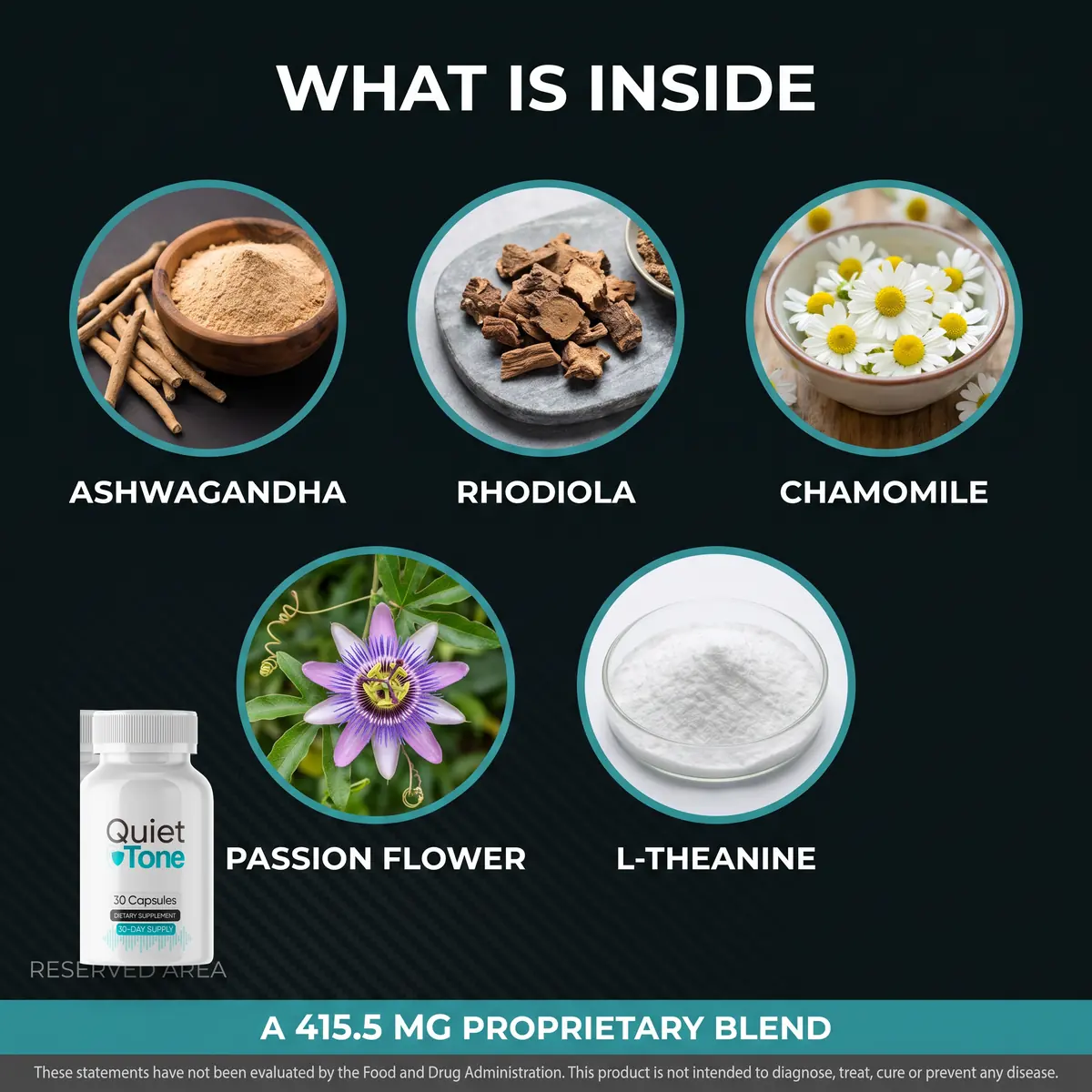
Ashwagandha and rhodiola are the two flagship adaptogens in QuietTone, and the simplest way to tell them apart is this: ashwagandha is traditionally used to settle and ground a wound-up system, while rhodiola is traditionally used to steady and energise a tired one. They pull in complementary directions, which is exactly why a thoughtful calm-and-hearing formula tends to use both rather than pick a single champion.
Ashwagandha vs rhodiola, decided in a few honest lines.
- Ashwagandha
- The calming, grounding adaptogen — traditionally used for winding down, easing a racing mind and steady stress resilience.
- Rhodiola
- The activating adaptogen — traditionally used for daytime alertness, stamina and coping when stress leaves you drained.
- Which for calm?
- For pure wind-down, ashwagandha; for foggy, exhausted stress, rhodiola. Everyday stress usually contains both.
- Why QuietTone uses both
- The pair balances each other inside a 415.5 mg blend, so you are not forced to choose settle or steady.
Both herbs are adaptogens — plants traditionally used to help the body cope with everyday stress. Neither is a treatment for any condition, and the evidence for each is still developing. But their traditional profiles are genuinely different, and that difference is the key to why QuietTone pairs them.
What is the difference between ashwagandha and rhodiola?
The core difference is direction of effect: ashwagandha is a grounding adaptogen while rhodiola is an activating one. Ashwagandha (Withania somnifera) comes from the Ayurvedic tradition of India, where it has been used for centuries as a restorative tonic — its species name, somnifera, even means “sleep-inducing.” Rhodiola (Rhodiola rosea) grows in the cold, high-altitude regions of Europe and Asia and was used by Scandinavian and Russian folk traditions to fight fatigue and endure hard conditions. One tradition reaches for calm; the other reaches for stamina.
Ashwagandha: what is it best known for?
Ashwagandha is the adaptogen most associated with switching off. In traditional use it is the herb people turn to when the body feels tense and the mind will not slow down, which is why it appears so often in wind-down and sleep-support formulas. The National Center for Complementary and Integrative Health notes it is among the more studied botanicals for stress, while stressing that the research is still limited and not a basis for medical claims. A 2023 systematic review in Nutrients of Withania somnifera and cortisol in stressed adults describes the same picture (Della Porta 2023, PMID 38140274), and a 2022 review of Rhodiola rosea preparations in Molecules calls the clinical evidence encouraging rather than settled (Ivanova Stojcheva 2022, PMID 35745023).
Why is ashwagandha called a grounding adaptogen?
“Grounding” is the plain-language way of saying ashwagandha is traditionally used to bring an over-revved system back down rather than push it up. People typically describe using it in the evening or after a demanding day, when the goal is to feel settled rather than switched on. For a deeper look at how it behaves in this formula, see our companion article on ashwagandha in QuietTone.
How does ashwagandha relate to hearing wellness?
The link is indirect and honest: ashwagandha does not act on the ears. Calmer, better-rested days can simply make a background hum feel less intrusive, because stress and poor sleep are known to make ear noise more noticeable. It is a supporting role, never a remedy.
Rhodiola: what is it best known for?
Rhodiola is the adaptogen most associated with staying sharp under pressure. Where ashwagandha settles, rhodiola is traditionally used to counter the drained, foggy feeling that stress and fatigue can bring — which is why it shows up in daytime energy and focus formulas rather than bedtime ones. Reviews indexed on PubMed describe preliminary research on rhodiola for fatigue and mental performance, while consistently noting that study quality varies and firm conclusions are premature.
Why is rhodiola called an activating adaptogen?
Because its traditional use points upward: alertness, endurance and resilience when energy is running low. Many people prefer to take rhodiola earlier in the day for exactly this reason, treating it as the “steady me through the afternoon” herb rather than the “help me wind down” one. Our detailed piece on rhodiola in QuietTone covers this profile in full.
Ashwagandha vs rhodiola: a side-by-side comparison
The clearest way to weigh two adaptogens is to line up their traditional profiles rather than their marketing. The table below compares the pair on the points that actually help you choose — where they come from, what they are reached for, and when people tend to take them.
| Feature | Ashwagandha | Rhodiola |
|---|---|---|
| Botanical name | Withania somnifera | Rhodiola rosea |
| Tradition of origin | Ayurveda (India) | Scandinavian & Russian folk use |
| Direction of effect | Grounding, calming | Activating, energising |
| Traditionally reached for | Winding down, tension, restful evenings | Fatigue, focus, stamina under stress |
| Common time of day | Evening or anytime | Morning or early afternoon |
| Best-fit stress type | Wound-up, can't switch off | Drained, foggy, running on empty |
Read the table and the tension is obvious: these herbs answer different questions. That is not a flaw — it is the whole reason a blend can be more balanced than either one alone.
See the exact dose in QuietTone →
Which adaptogen is best for stress and calm?
The most useful answer is that neither wins outright, because everyday stress is rarely one flavour. Some days stress feels like a mind that will not stop — the ashwagandha kind. Other days it feels like being wrung out and foggy by mid-afternoon — the rhodiola kind. Most of us live with a mix of both across a single week, which is precisely why forcing a choice between the two often leaves a gap.

If you genuinely only need one effect — say, pure evening wind-down — a single-herb ashwagandha product may be all you want. But if you are after steadier ground across a whole day, the combination is the more sensible bet, and it is the approach a calm-and-hearing formula is built around.
Why does QuietTone use both instead of choosing one?
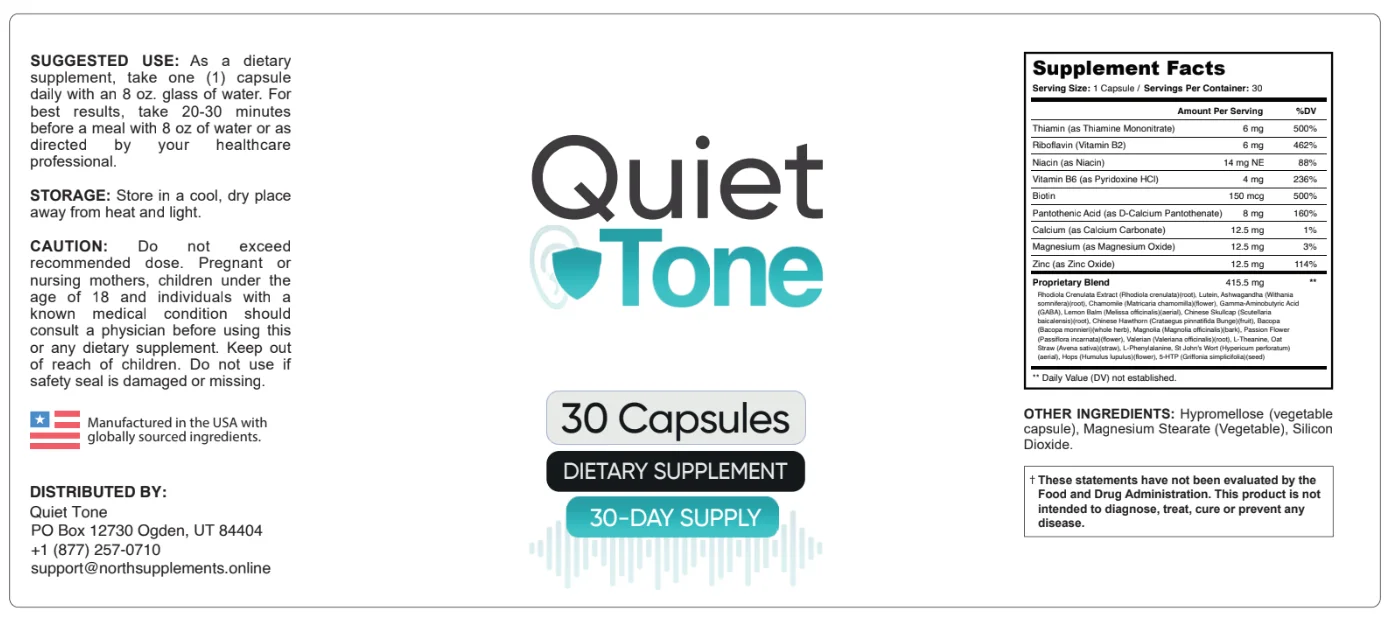
QuietTone blends ashwagandha and rhodiola because their opposite directions balance into something steadier than either alone. The category logic behind that pairing is set out in our explainer on how adaptogens work inside the QuietTone blend. Inside a single once-daily capsule, QuietTone pairs the two adaptogens with chamomile, lemon balm, GABA and L-theanine in a 415.5 mg botanical blend, then adds nine vitamins and minerals that support normal nervous-system function. The idea is not to megadose one herb but to layer complementary calm-support ingredients so the routine covers both the wound-up and the worn-out ends of a day.
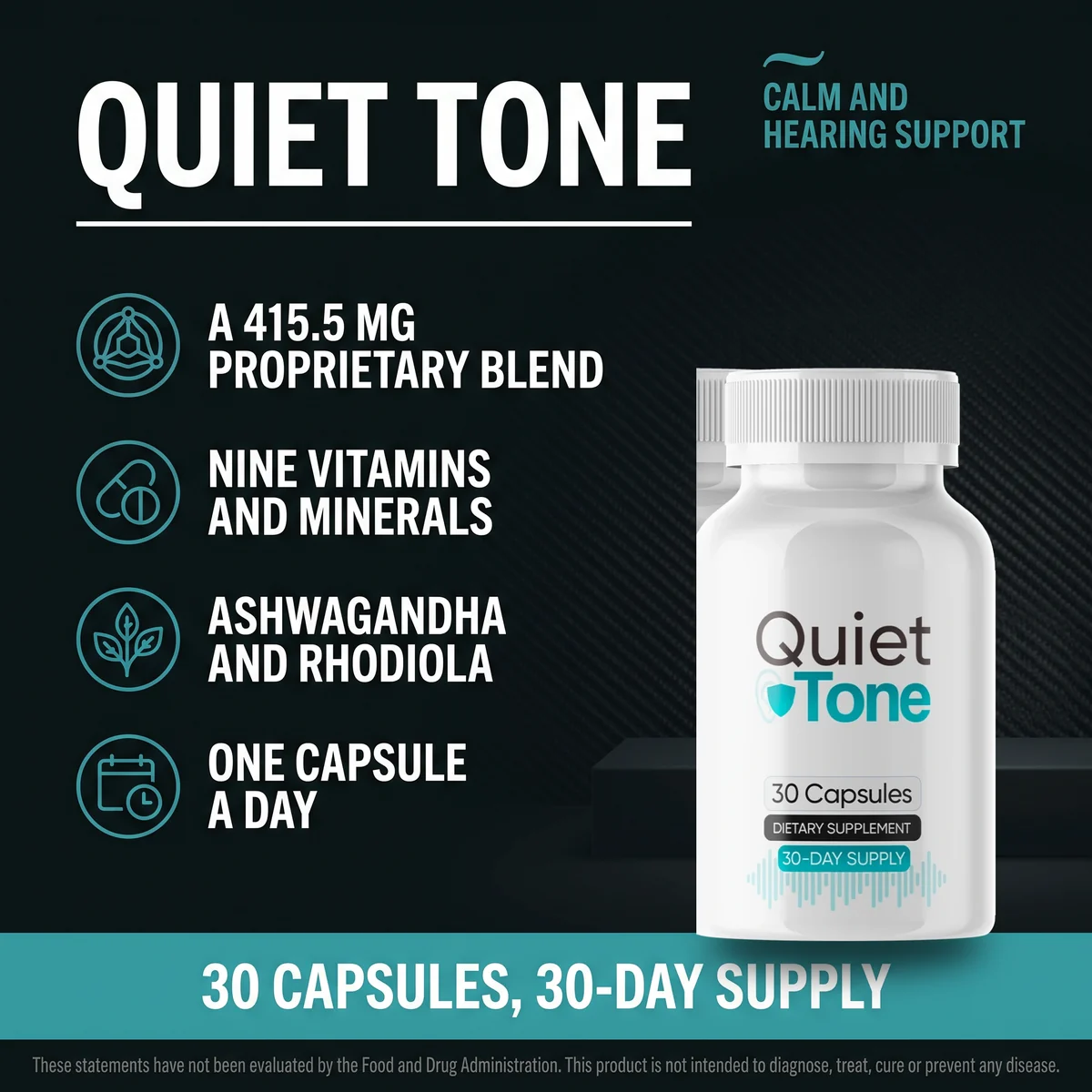
This layering is also why QuietTone is honest about being a supporting player. It does not claim to treat, cure or prevent anything; it aims to make a calm, ear-friendly routine easier to keep. To see how the botanicals sit alongside the minerals, read our overview of the best nutrients for hearing and calm, or open the full ingredients section.

Get both adaptogens in one capsule
Rather than buying ashwagandha and rhodiola separately, QuietTone puts both in a once-daily capsule with four more calming botanicals and nine vitamins and minerals. The six-bottle bundle is the best value at $49 per bottle, with free U.S. shipping and a 60-day guarantee.
Check today's QuietTone pricing — from $49/bottleHow do you take ashwagandha and rhodiola safely?
The safest approach with any adaptogen is a consistent daily amount taken at the same time, alongside a quick check with your doctor if anything about your health is complicated. Because ashwagandha leans calming and rhodiola leans activating, timing is the one nuance worth knowing: many people take activating rhodiola earlier and calming ashwagandha later, though in a balanced daily blend like QuietTone the two are designed to be taken together in one capsule. The quick-reference table below sums up their traditional use patterns.
| Question | Ashwagandha | Rhodiola |
|---|---|---|
| Traditional purpose | Calm, wind-down, resilience | Energy, focus, stamina |
| Often taken | Evening / anytime | Morning / early afternoon |
| Pairs well with | Chamomile, lemon balm, GABA | B-vitamins, L-theanine |
| In QuietTone | Yes — part of the 415.5 mg blend | Yes — part of the 415.5 mg blend |
| Evidence status | Preliminary, still developing | Preliminary, still developing |
Whichever route you take, adaptogens are a slow-and-steady story. Give a routine several weeks to a few months before judging it, keep the dose consistent, and remember that individual results vary.
When should you talk to a doctor?
Adaptogens support an already-healthy routine; they are not a substitute for medical care. Speak with your doctor before starting ashwagandha, rhodiola or any blend if you are pregnant or nursing, under 18, take prescription medication, have a thyroid or autoimmune condition, or notice new or one-sided ear symptoms, dizziness or sudden hearing change.
Frequently asked questions
What is the main difference between ashwagandha and rhodiola?
Ashwagandha is traditionally used as a grounding, calming adaptogen associated with winding down and steady stress resilience, while rhodiola is traditionally used as a more activating adaptogen linked with alertness and stamina under pressure. In short, ashwagandha tends to settle and rhodiola tends to energise, which is why many formulas pair them.
Is ashwagandha or rhodiola better for calm?
For pure wind-down and evening calm, ashwagandha is the more traditionally calming of the two. Rhodiola is aimed more at daytime clarity and coping with fatigue under stress. Many people find the combination more balanced than either herb alone, which is the approach QuietTone takes.
Can you take ashwagandha and rhodiola together?
They are frequently combined in adaptogen blends and are generally well tolerated together in the amounts found in supplements. QuietTone includes both in a single 415.5 mg botanical blend. As with any supplement, check with your doctor first if you are pregnant, nursing, under 18, take medication or have a health condition.
How much ashwagandha and rhodiola are in QuietTone?
QuietTone uses a 415.5 mg proprietary botanical blend that pairs ashwagandha and rhodiola with chamomile, lemon balm, GABA and L-theanine, alongside nine vitamins and minerals. The exact split between the botanicals is listed on the product's Supplement Facts label.
Which adaptogen is best for stress?
It depends on the kind of stress. Ashwagandha is traditionally chosen for a wound-up, can't-switch-off feeling, while rhodiola is traditionally chosen for stress that leaves you drained and foggy. Because everyday stress often includes both, a blend of the two is a sensible middle path rather than picking a single winner.
How long before ashwagandha or rhodiola makes a difference?
Adaptogens work gradually, so most people give a consistent daily routine several weeks to a few months rather than expecting a same-day effect. Individual results vary, and these botanicals support a routine rather than treating any condition.
Try QuietTone risk-free for 60 days →
QuietTone is a dietary supplement, not a treatment for any medical condition. These statements have not been evaluated by the Food and Drug Administration. This product is not intended to diagnose, treat, cure or prevent any disease. Always consult a qualified healthcare professional about your individual needs.
References & further reading
- National Center for Complementary and Integrative Health (NCCIH). Ashwagandha. nccih.nih.gov/health/ashwagandha
- National Center for Complementary and Integrative Health (NCCIH). Rhodiola. nccih.nih.gov/health/rhodiola
- Ivanova Stojcheva E, et al. The effectiveness of Rhodiola rosea L. preparations in alleviating various aspects of life-stress symptoms and stress-induced conditions. Molecules, 2022. PMID 35745023
- Della Porta M, et al. Effects of Withania somnifera on cortisol levels in stressed human subjects: a systematic review. Nutrients, 2023. PMID 38140274
- Examine.com. Ashwagandha — evidence-based summary. examine.com/supplements/ashwagandha
- Examine.com. Rhodiola rosea — evidence-based summary. examine.com/supplements/rhodiola-rosea
These references describe the ingredients in general terms and do not constitute evidence that any product treats, cures or prevents any condition.
Keep reading: rhodiola in QuietTone · ashwagandha in QuietTone · the best nutrients for hearing and calm · back to the QuietTone blog · homepage.