What causes ringing in the ears? A calm QuietTone explainer

Updated September 2026 · reviewed by the QuietTone Research Team. We are an independent information resource, not a medical provider, and this article is educational rather than medical advice.
Ringing in the ears — a buzz, hiss or high whistle with no source in the room — is called tinnitus, and it is extremely common. It is a symptom rather than a disease, and for most people it reflects how the ears and brain are processing sound. This calm, plain-language explainer covers what causes it, why it seems louder on some days, and the everyday habits that help you live with it more comfortably.
What that ringing is, and what most often sits behind it.
- The short version
- Ringing in the ears is tinnitus — a common symptom, usually not dangerous, but worth checking if it is new, sudden or one-sided.
- Most common triggers
- Loud noise, earwax build-up, stress and poor sleep, high caffeine, ageing, reduced circulation, and some medications.
- Why it varies
- Tiredness, stress and stimulants make the same sound feel louder, which is why a calmer nervous system helps.
- What helps you cope
- Protecting your ears, steady sleep, lower stress and stimulants, and, for some, calming nutrients as part of a routine.
- See someone if
- The ringing is sudden, one-sided, or paired with hearing loss, dizziness, pain or discharge.
If ear noise has crept into your quiet moments, you are far from alone. Below we unpack the usual suspects, then look at where habits, nutrients and a formula like QuietTone fit into a supportive routine.
What is that ringing, exactly?
Tinnitus is the perception of sound — ringing, buzzing, hissing or clicking — when no matching sound exists outside your head. It can be constant or come and go, in one ear or both. In most cases it is linked to changes in how the inner ear and the hearing centres of the brain communicate: when certain input drops, the system can turn up its own internal “gain,” and you notice noise that was always faintly there. It is a symptom, not a diagnosis, and rarely a sign of anything serious. Its impact, though, tracks closely with mood and stress: a 2025 meta-analysis in the American Journal of Otolaryngology found a consistent correlation between tinnitus and mental-health measures (Jiang 2025, PMID 40088765).
What causes ringing in the ears?
Usually more than one thing is at play. These are the everyday contributors that come up most often.
Loud-noise exposure
Concerts, power tools, loud workplaces and years of high-volume headphones are among the most common contributors. Loud sound strains the delicate hair cells of the inner ear, and that strain is one of the most preventable pieces of the picture — volume control and hearing protection genuinely matter. The daily version of that is laid out in how to protect your hearing daily.
Earwax and blockages
Sometimes the cause is refreshingly simple. A build-up of earwax, or a blockage from a cold or sinus congestion, can change how sound moves through the ear and make ringing more noticeable. Never dig with cotton buds; a professional can safely clear stubborn wax.
Stress, sleep and caffeine
Stress and short sleep make the nervous system more reactive, and a heavy caffeine load can do the same, so the same ear noise feels louder. This is one reason calm-first habits are so useful: they change how loud the ringing feels, even when the sound itself is unchanged. We follow that thread in the link between stress and tinnitus.
Age and circulation
Hearing naturally changes with age, and because the inner ear depends on a rich supply of blood through tiny vessels, anything that reduces circulation can play a role. Supporting healthy circulation with regular movement and not smoking is good for your ears as well as your heart.
Medications and health conditions
Some medications list ear noise as a possible effect, and various health conditions can contribute too. Never stop a prescribed medicine on your own — but if you suspect a link, it is worth a conversation with the professional who prescribed it.
See how QuietTone supports everyday calm →
| Everyday trigger | What is happening | What tends to help |
|---|---|---|
| Loud noise | Strain on inner-ear hair cells | Volume limits, breaks, hearing protection |
| Earwax build-up | Blocked or altered sound path | Safe, professional wax removal |
| Stress & poor sleep | A more reactive nervous system | Steady sleep, slow breathing, downtime |
| High caffeine | Heightened perception of noise | Moderating coffee and energy drinks |
| Reduced circulation | Less blood flow to the inner ear | Regular movement, not smoking |
Why does it get louder some days?
Here is the reassuring part: the volume you perceive is not fixed. On a well-rested, low-stress day with plenty of background sound, many people barely notice their tinnitus. On a tired, stressful, over-caffeinated day in a silent room, the very same signal can feel intrusive. That is because your brain’s attention and your stress state act like a volume dial on the noise. It is also why the most effective coping strategies are calming ones — they turn that dial down. Our practical companion piece covers how to quiet ringing ears naturally.

Support a calmer baseline
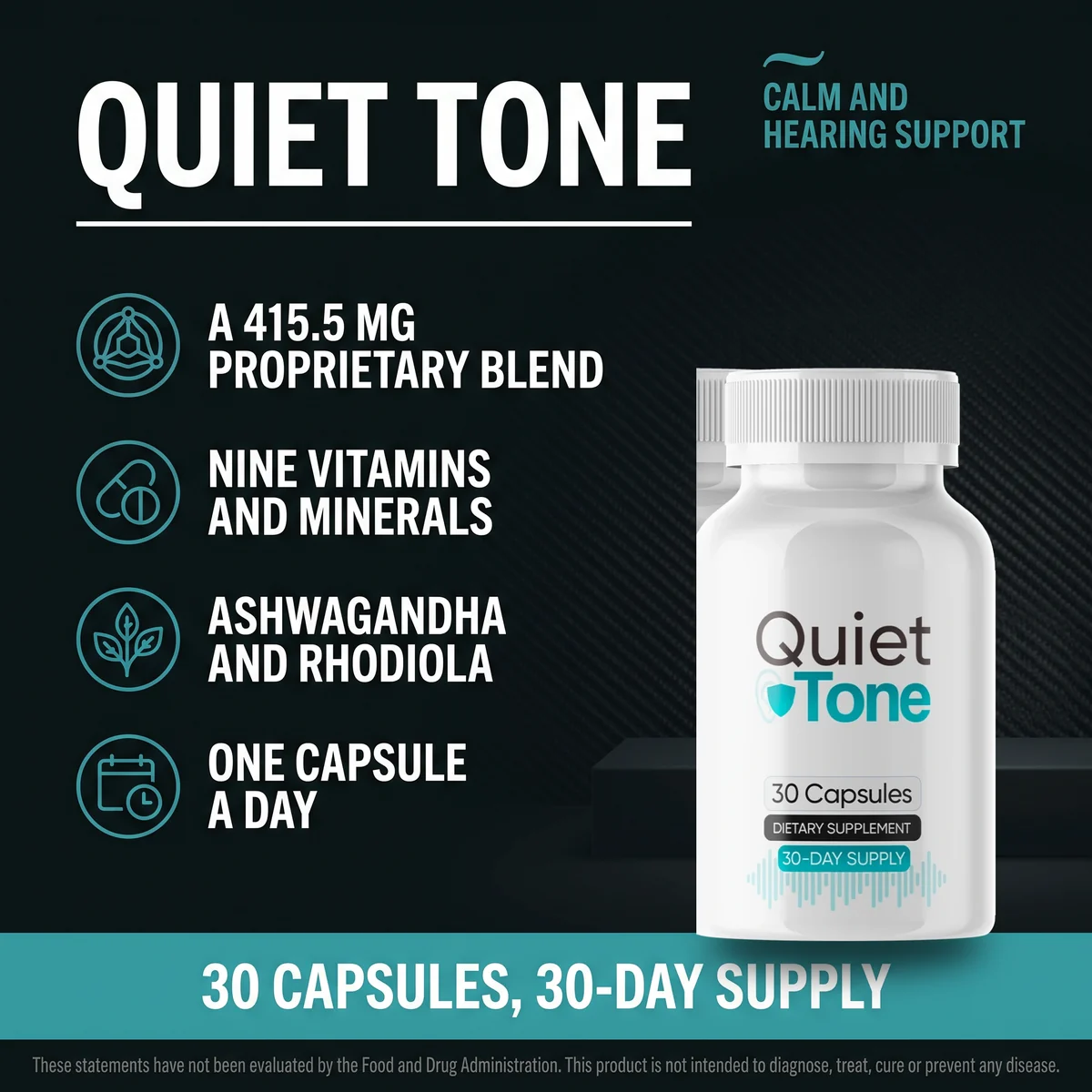
QuietTone pairs nine vitamins and minerals with a 415.5 mg blend of calming botanicals like ashwagandha, chamomile and lemon balm. The six-bottle bundle is the best value at $49 per bottle, with free U.S. shipping and a 60-day guarantee.
Order QuietTone — from $49/bottleCalm-first habits that help you cope
You cannot always change the sound, but you can change how much it bothers you. The habits below are gentle, free and widely recommended for living more comfortably with ear noise.
- Add soft background sound — a fan, quiet music or nature sounds — so silence is less stark.
- Protect your sleep with a consistent bedtime and a wind-down routine.
- Practise slow breathing or a short daily relaxation to lower overall stress.
- Moderate caffeine and alcohol and notice how your own ears respond.
- Keep moving to support healthy circulation.
- Shift your attention — the less you monitor the sound, the more it fades into the background.
| Calming nutrient | Category | Traditional / general role |
|---|---|---|
| Magnesium | Mineral | Contributes to normal nervous-system and psychological function. |
| Ashwagandha | Adaptogen | Traditionally used to support calm and everyday stress resilience. |
| Chamomile | Botanical | A classic wind-down herb used for gentle, everyday relaxation. |
| Lemon balm & valerian | Botanicals | Long used in traditional wellness to support restful evenings. |
| L-theanine | Amino acid | Associated with a relaxed-yet-alert state, without drowsiness. |
Where do nutrients and QuietTone fit?
Nutrients are part of a calming routine, not a cure. Because ear noise so often feels louder when you are stressed or run-down, supporting everyday calm can make it easier to live with. That is the idea behind QuietTone: nine vitamins and minerals — including magnesium and zinc for normal nervous-system function — plus a 415.5 mg botanical blend of ashwagandha, rhodiola, chamomile, lemon balm, GABA and L-theanine, in one simple daily capsule. Read more in our best nutrients for hearing and calm guide, or the full ingredients section.

When should you see a professional?
Most tinnitus is not dangerous, but some situations deserve prompt attention. See a professional if the ringing appears suddenly, affects only one ear, or comes with hearing loss, dizziness, ear pain or discharge. Also seek help if it is disrupting your sleep or mood. A clinician can check for treatable causes such as earwax, review any medications, and arrange the right support. QuietTone is a wellness supplement, not a treatment for tinnitus or any medical condition.
Frequently asked questions
What is the ringing in my ears?
That ringing, buzzing or hissing with no external source is commonly called tinnitus. It is a symptom, not a disease, and it is very common. Most of the time it reflects how the ear and brain are processing sound rather than a serious problem, but new or one-sided ringing is worth discussing with a professional.
What are the most common causes of ringing in the ears?
The most common contributors are loud-noise exposure, a build-up of earwax, stress and poor sleep, high caffeine, natural changes with age, reduced circulation, and certain medications or health conditions. Often more than one factor is at play at the same time.
Why does the ringing get louder on some days?
Tiredness, stress, dehydration and caffeine can all make ear noise more noticeable, even when the sound itself has not changed. This is why calming habits — steady sleep, slow breathing, lower stimulants — often make quiet moments feel quieter.
Can stress and sleep affect ear ringing?
Yes. Stress and short sleep raise the hormones that make the nervous system more reactive, so background ear noise tends to feel louder. Protecting sleep and building simple decompression habits is one of the most useful things many people can do.
Do calming nutrients help with ear noise?
Nutrients such as magnesium and traditionally used botanicals like ashwagandha, chamomile and lemon balm are associated with everyday calm, which can make ear noise easier to live with. They support a routine and are not a treatment for tinnitus or any disease.
When should I see a professional about ringing in my ears?
See a professional if the ringing is sudden, in one ear only, or comes with hearing loss, dizziness, ear pain or discharge. Also seek advice if it disrupts your sleep or mood, so the cause can be checked and the right support arranged.
Try QuietTone risk-free for 60 days →
QuietTone is a dietary supplement, not a treatment for any medical condition. These statements have not been evaluated by the Food and Drug Administration. This product is not intended to diagnose, treat, cure or prevent any disease. Always consult a qualified healthcare professional about your individual needs.
References & further reading
- National Institute on Deafness and Other Communication Disorders (NIDCD). Tinnitus. nidcd.nih.gov/health/tinnitus
- National Center for Complementary and Integrative Health (NCCIH). Chamomile. nccih.nih.gov/health/chamomile
- National Institutes of Health, Office of Dietary Supplements. Magnesium — Fact Sheet for Health Professionals. ods.od.nih.gov/factsheets/Magnesium-HealthProfessional
- Jiang Y, et al. Systematic review and meta-analysis of the correlation between tinnitus and mental health. American Journal of Otolaryngology, 2025. PMID 40088765
- Examine.com. Ashwagandha — evidence-based summary. examine.com/supplements/ashwagandha
These references describe the ingredients and topics in general terms and do not constitute evidence that any product treats, cures or prevents any condition.
Keep reading: how to support healthy hearing naturally · the best nutrients for hearing and calm · back to the QuietTone blog · homepage.