How to quiet ringing ears naturally with QuietTone

Updated September 2026 · reviewed by the QuietTone Research Team. We are an independent information resource, not a medical provider, and this article is educational rather than medical advice.
To quiet ringing ears naturally means using everyday sleep, stress, hearing-protection and sound-environment habits — and, if you choose, a calming nutrient-and-botanical routine — to change your relationship with ear noise so that quiet moments feel genuinely quieter. It rarely switches the sound off, but it can make ringing far less intrusive, and it works alongside, not instead of, the guidance of your doctor.
Can you quiet ringing ears naturally? Honestly, not like a switch — but you can turn down how loud and how bothersome it feels with a few consistent habits.
- Calm the system
- Steady sleep and lower stress are the biggest levers — a settled nervous system makes ringing feel quieter, even when the sound is unchanged.
- Fill the silence
- Gentle background sound gives ringing less empty space to stand out against, which is why quiet rooms often feel loudest.
- Protect your ears
- Comfortable listening volume and hearing protection around loud noise stop the strain that makes ear noise worse.
- Where QuietTone fits
- A once-daily calm-and-hearing capsule can support the routine — it is a supplement, not a treatment for tinnitus or any disease.
Ringing in the ears is common, and for most people the realistic goal is not silence but steadier ground. This how-to walks through the daily habits with the most influence and shows where a botanical formula like QuietTone can play a supporting role.

What does it mean to quiet ringing ears naturally?
Quieting ringing ears naturally is the practice of using sleep, stress management, ear protection and your sound environment to make ear noise less noticeable and less bothersome, rather than trying to erase it. It is not a cure; it is a set of small, repeatable choices that calm your nervous system and protect your hearing. Two ideas anchor everything below: attention amplifies — the more silence and worry surround the ringing, the louder it seems — and these habits stack, so each helps a little and together they help a lot.
Why does ear ringing feel louder on some days?
Ear ringing feels louder on days when your body and surroundings give it more room to stand out. Hearing runs on a delicate chain, and that whole system is sensitive to more than volume. Tiredness, stress, dehydration, a heavy caffeine load and a silent room can all make a background hum feel sharper, even when nothing has actually changed in your ears. That is good news: it means the levers below can genuinely move how your ringing feels. A 2025 systematic review and meta-analysis in the American Journal of Otolaryngology found tinnitus consistently correlated with anxiety and depression, which is why working on the stress side so often changes the experience of the sound (Jiang 2025, PMID 40088765).
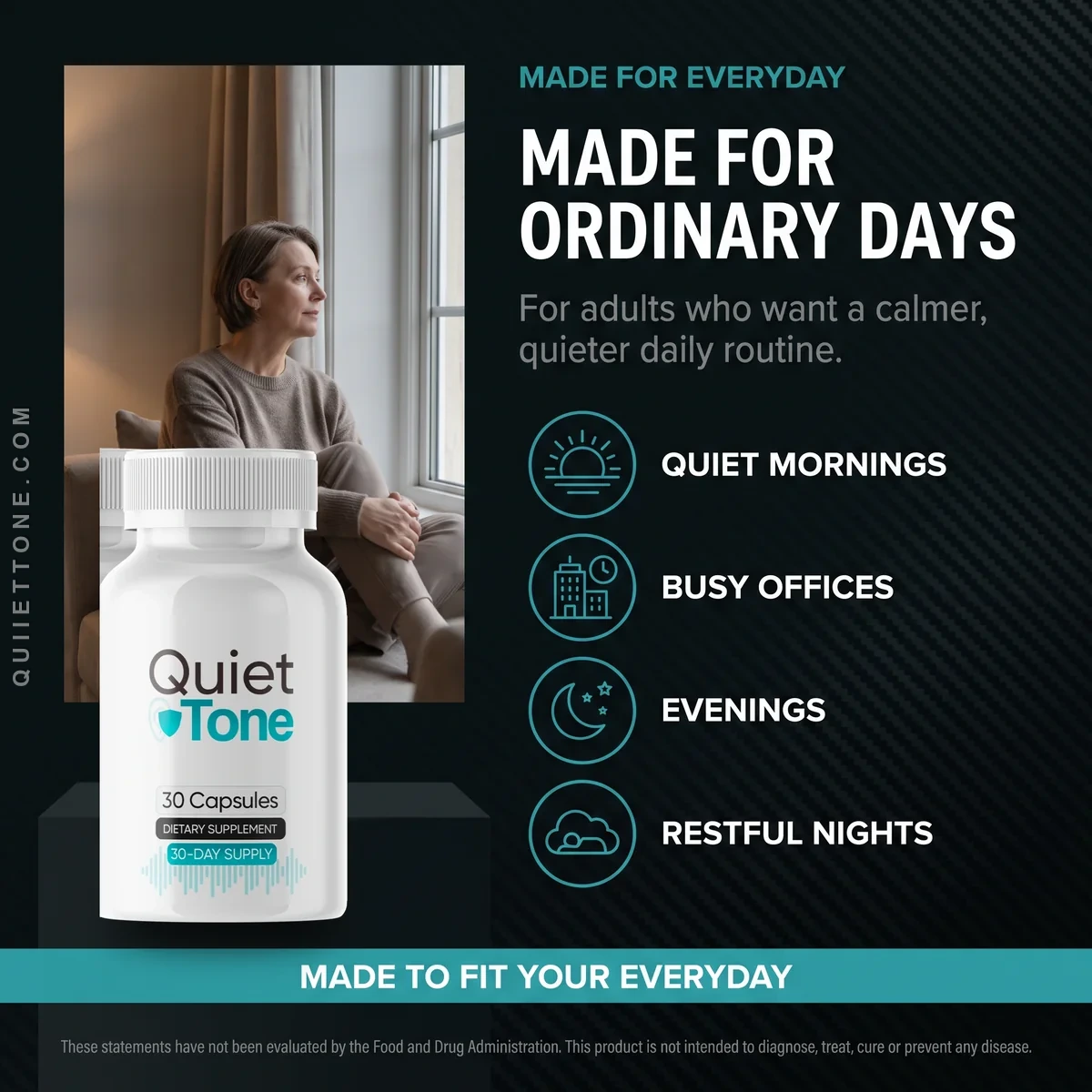
What daily habits help calm ringing ears?
The habits that calm ringing ears are the same ones that calm your body and protect your hearing, applied consistently. Here are the ones with the most leverage, roughly in order of impact.
1. Can better sleep and lower stress really help?
Sleep and stress are the quiet influencers. A short night raises stress hormones that make ear noise more noticeable the next day, and ongoing stress does the same through cortisol. Aim for seven to nine hours of regular sleep, and build in simple decompression — a walk, slow breathing, a few minutes outdoors. For many people this single pairing does more to soften ringing than any gadget.
2. How does your sound environment change the ringing?
Silence is where ringing shines. In a perfectly quiet room the brain hunts for something to listen to and lands on the ear noise, which is why bedtime feels loudest. A low layer of neutral sound — a fan, soft music, rainfall or nature audio — gives the ringing less empty space to fill, and the perceived volume drops. Keep it gentle; the aim is a soft blanket of sound, not a competition.
3. Why does protecting your ears from loud noise matter?
Loud sound is the single most preventable contributor to hearing change, and protecting against it is simple. Keep personal-audio volume comfortable rather than maximum, take regular listening breaks, and reach for well-fitting earplugs or earmuffs around concerts, power tools and other loud settings. Your ears do not build tolerance to volume — they take the strain, and that strain can leave the ringing louder afterwards.
4. Do movement and diet play a part?
The inner ear is fed by some of the smallest blood vessels in the body, so anything that supports healthy circulation tends to support your ears. Regular movement keeps blood flowing, while avoiding smoking protects those tiny vessels. On the plate, a whole-food pattern rich in vegetables, fruit, legumes, nuts and oily fish supplies the magnesium, zinc and B-vitamins your nervous system relies on. It is worth noticing, too, how your own ears respond to caffeine, alcohol and dehydration.
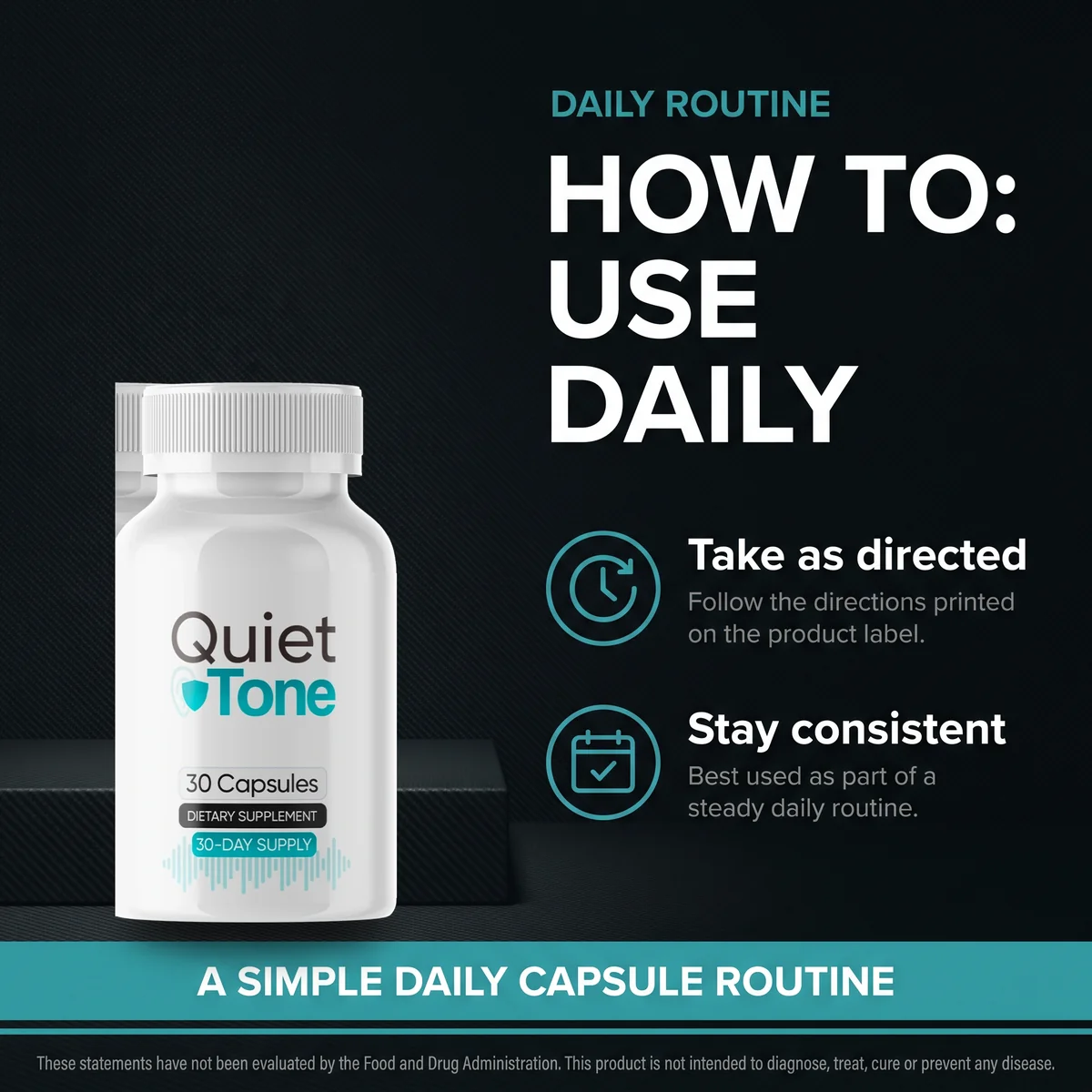
See the exact dose in QuietTone →
Where does a nutrient routine like QuietTone fit?
A supplement fits as support for the habits above — never as a substitute, and never as a treatment for any condition. Still, several nutrients and botanicals have long been part of the hearing-and-calm conversation, and the snapshot below covers the best known. Many appear together in QuietTone, which is built around everyday calm rather than any medical claim.
| Nutrient / botanical | Why it is discussed | Traditional / general role |
|---|---|---|
| Magnesium | Essential mineral | Contributes to normal nervous-system function and normal muscle and psychological function. |
| Zinc | Essential mineral | Supports normal immune and cognitive function as part of a balanced diet. |
| B-complex vitamins | Energy metabolism | Contribute to normal energy-yielding metabolism and the reduction of tiredness and fatigue. |
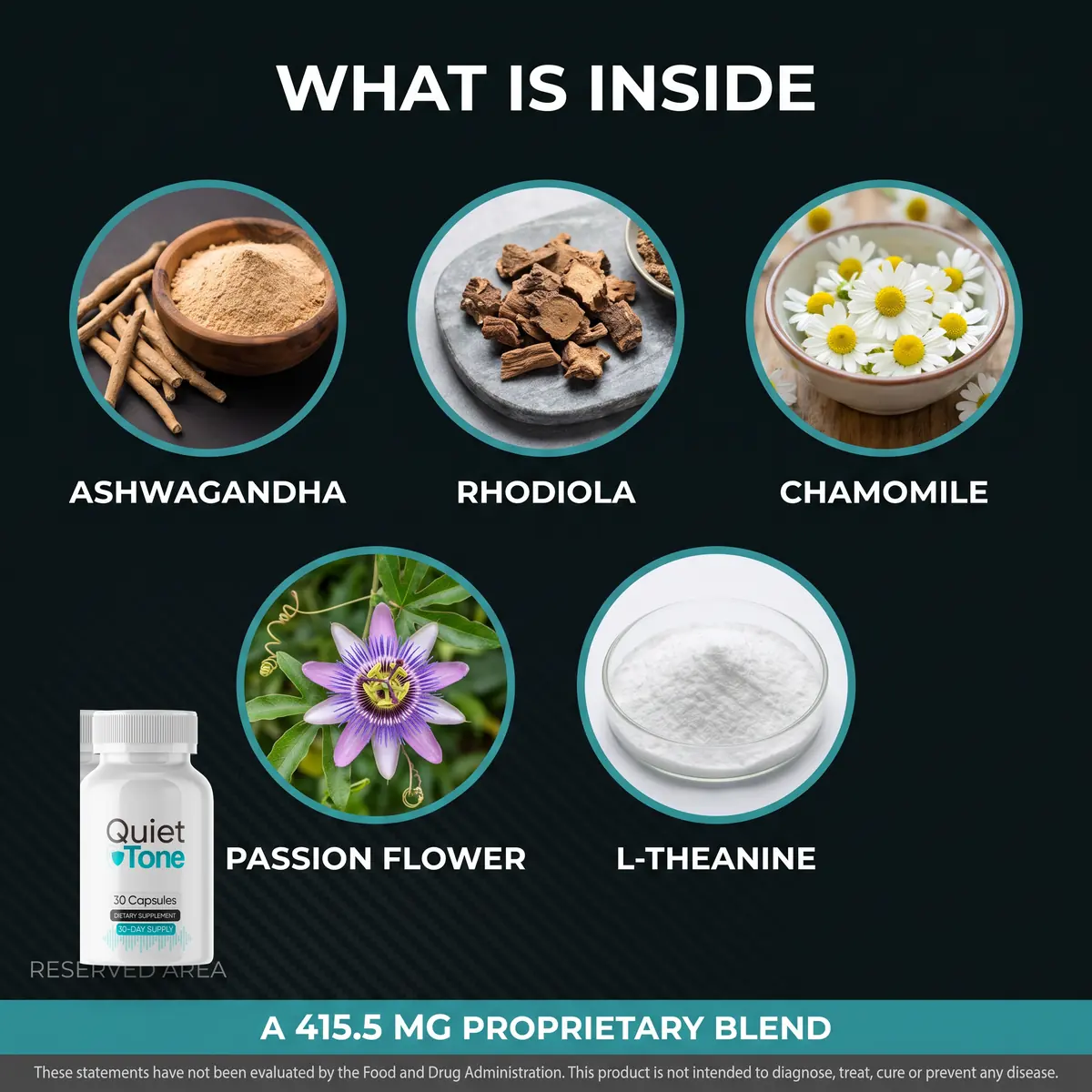
| Ashwagandha & rhodiola | Adaptogens | Traditionally used herbs associated with everyday calm and stress resilience. |
| Chamomile, lemon balm & L-theanine | Calming botanicals | Classic wind-down ingredients used to support relaxation and restful evenings. |
QuietTone brings these together: nine vitamins and minerals plus a 415.5 mg botanical blend of ashwagandha, rhodiola, chamomile, lemon balm, GABA and L-theanine, in one simple capsule. For a closer look, read our guide to the best nutrients for hearing and calm or the full ingredients section.

Make it a daily habit
QuietTone is a once-daily capsule pairing nine vitamins and minerals with a 415.5 mg calming botanical blend. The six-bottle bundle is the best value at $49 per bottle, with free U.S. shipping and a 60-day guarantee.
Check today's QuietTone pricing — from $49/bottleHow do you build a simple daily routine to reduce ear ringing?
The best routine to reduce ear ringing is the one you will actually keep, so stack one small habit at a time until each feels automatic:
- Set a comfortable volume ceiling on your phone and stick to it.
- Take a listening break every hour of headphone use.
- Add gentle background sound in quiet rooms and at bedtime.
- Wind down screen-free so sleep does its quiet work.
- Move for 20 minutes to support healthy circulation.
- Take any supplement at the same time daily — for QuietTone, one capsule with water before a meal.
If ringing spikes tonight, do not fight it: turn on a fan or soft playlist and slow your breathing so the sound has company rather than a silent stage. For the bigger picture, see our explainer on what causes ringing in the ears.
Which habits work fastest? An at-a-glance table
A “fast” habit is one you feel the same day; a “slow” habit reshapes your baseline over weeks. Both matter for calmer ears. This table sorts the core habits by how quickly they help and how much effort they ask.
| Habit | Typical time to notice | Everyday effort |
|---|---|---|
| Add gentle background sound | Same day | Low |
| Lower personal-audio volume | Same day | Low |
| Hearing protection in loud settings | Same day | Low |
| Slow-breathing / decompression breaks | Days | Low |
| Consistent sleep & stress routine | Weeks | Medium |
| Regular activity & healthy circulation | Weeks to months | Higher |
Consistency turns any of these into a steadier month. Calming botanicals build their support gradually, so most people choose a multi-month supply — compare the packages and pricing. For more on the daily side, see how to support healthy hearing naturally.
When should you talk to a doctor about ringing ears?
Natural habits are for supporting hearing already within a normal range; they are not a replacement for medical care. Speak with your doctor if ringing comes on suddenly, is in only one ear, or arrives with hearing loss, ear pain, dizziness or discharge, and check in before adding any supplement if you are pregnant or nursing, under 18, taking medication, or managing a diagnosed condition.
Frequently asked questions
Can you quiet ringing ears naturally?
You often cannot switch ear ringing off at will, but you can change your relationship with it. Steady sleep, lower stress, sensible hearing protection and a calmer sound environment make quiet moments feel quieter for many people, even when the sound itself has not changed. These habits support hearing already within a normal range and are not a treatment for any condition.
What is the fastest way to calm ringing ears in the moment?
Add gentle background sound — a fan, soft music or nature audio — so the ringing has less silence to stand out against, then slow your breathing to settle your nervous system. Lowering your listening volume and stepping away from loud noise also help right away. These are comfort habits, not cures.
Does stress make ear ringing worse?
For many people, yes. Stress and short sleep tend to make background ear noise more noticeable, so calming habits such as regular sleep, slow breathing and time outdoors can make ringing feel less intrusive, even when the underlying sound is unchanged.
Which habits help reduce ear ringing over time?
Protecting your ears from loud noise, keeping personal-audio volume comfortable, sleeping well, managing stress, staying active for healthy circulation and eating mineral-rich whole foods are the core habits. They stack: each helps a little, and together they help steady your baseline over weeks to months.
Where does a supplement like QuietTone fit in?
QuietTone is a once-daily capsule that pairs nine vitamins and minerals with a 415.5 mg calming botanical blend. It supports a calm-and-hearing routine alongside the habits above — it is a dietary supplement, not a treatment for tinnitus or any disease, and results vary from person to person.
When should I see a doctor about ringing ears?
Speak with a doctor if ringing is sudden, in only one ear, or comes with hearing loss, ear pain, dizziness or discharge, and before adding a supplement if you are pregnant or nursing, under 18, taking medication or managing a diagnosed condition. Natural habits support hearing within a normal range; they do not replace medical care.
Try QuietTone risk-free for 60 days →
QuietTone is a dietary supplement, not a treatment for tinnitus or any medical condition. These statements have not been evaluated by the Food and Drug Administration. This product is not intended to diagnose, treat, cure or prevent any disease. Always consult a qualified healthcare professional about your individual needs.
References & further reading
- National Institute on Deafness and Other Communication Disorders (NIDCD). Tinnitus. nidcd.nih.gov/health/tinnitus
- National Institute on Deafness and Other Communication Disorders (NIDCD). Noise-Induced Hearing Loss. nidcd.nih.gov/health/noise-induced-hearing-loss
- Mayo Clinic. Tinnitus — Symptoms & causes. mayoclinic.org/diseases-conditions/tinnitus
- National Center for Complementary and Integrative Health (NCCIH). Ashwagandha. nccih.nih.gov/health/ashwagandha
- National Institutes of Health, Office of Dietary Supplements. Magnesium — Fact Sheet for Health Professionals. ods.od.nih.gov/factsheets/Magnesium-HealthProfessional
- Examine.com. L-Theanine — evidence-based summary. examine.com/supplements/theanine
These references describe the ingredients and habits in general terms and do not constitute evidence that any product treats, cures or prevents any condition.
Keep reading: what causes ringing in the ears · how to support healthy hearing naturally · the QuietTone review · back to the QuietTone blog.