What a proprietary blend really means: how to read QuietTone's 415.5 mg blend

Updated September 2026 · reviewed by the QuietTone Research Team. We are an independent information resource, not a medical provider, and this article is educational rather than medical advice.
A proprietary blend is a group of ingredients printed on a supplement label under one combined weight, without disclosing the exact dose of each ingredient inside it. The total is real and the ingredients are ordered from most to least, but the format asks you to trust the recipe rather than audit every milligram. This guide demystifies it using QuietTone's 415.5 mg botanical blend as the worked example — what the number tells you, what it does not, and how to read a blend label.
What a proprietary blend is, and what its total figure can and cannot tell you.
- Definition
- A proprietary blend lists several ingredients together under a single combined milligram total instead of a dose for each one.
- What the total tells you
- The blend's overall weight, and — because the list is ordered by amount — which ingredient is most and least present.
- What it does not tell you
- The exact milligrams of any single ingredient inside the blend, so you cannot line each one up against a study dose.
- Is it legal?
- Yes. U.S. FDA rules allow blends, provided the total weight is shown and ingredients are listed in descending order by amount.
- QuietTone's example
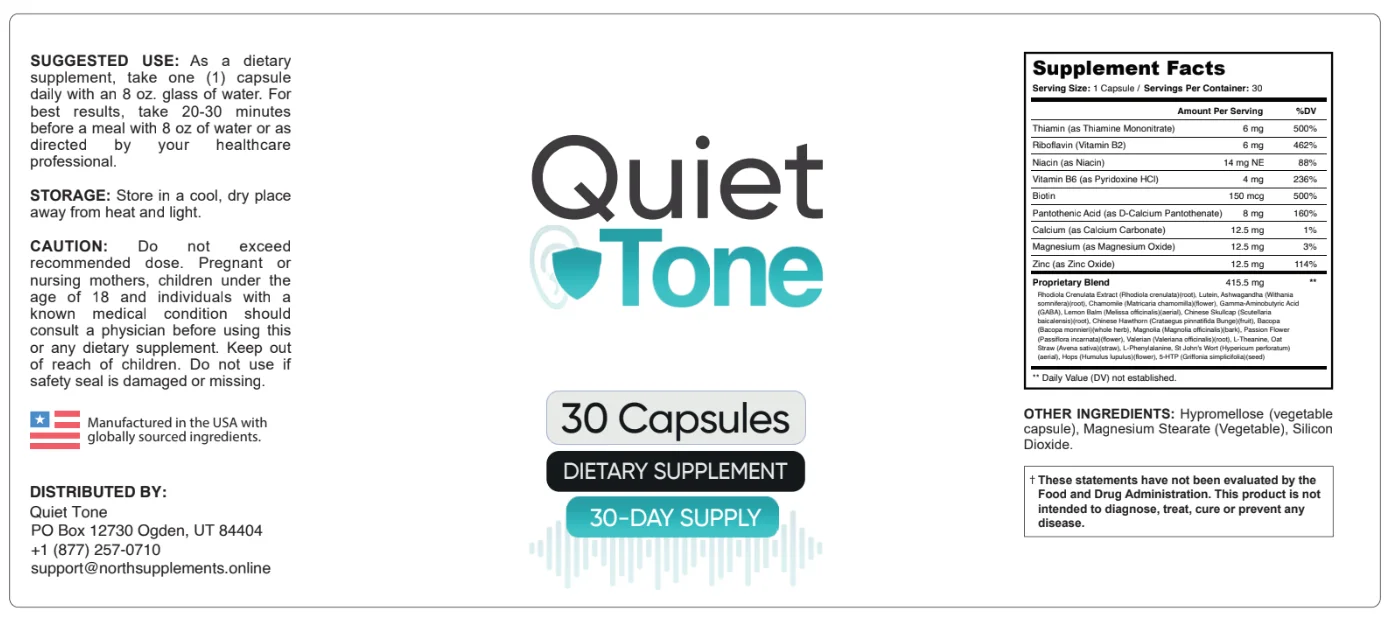
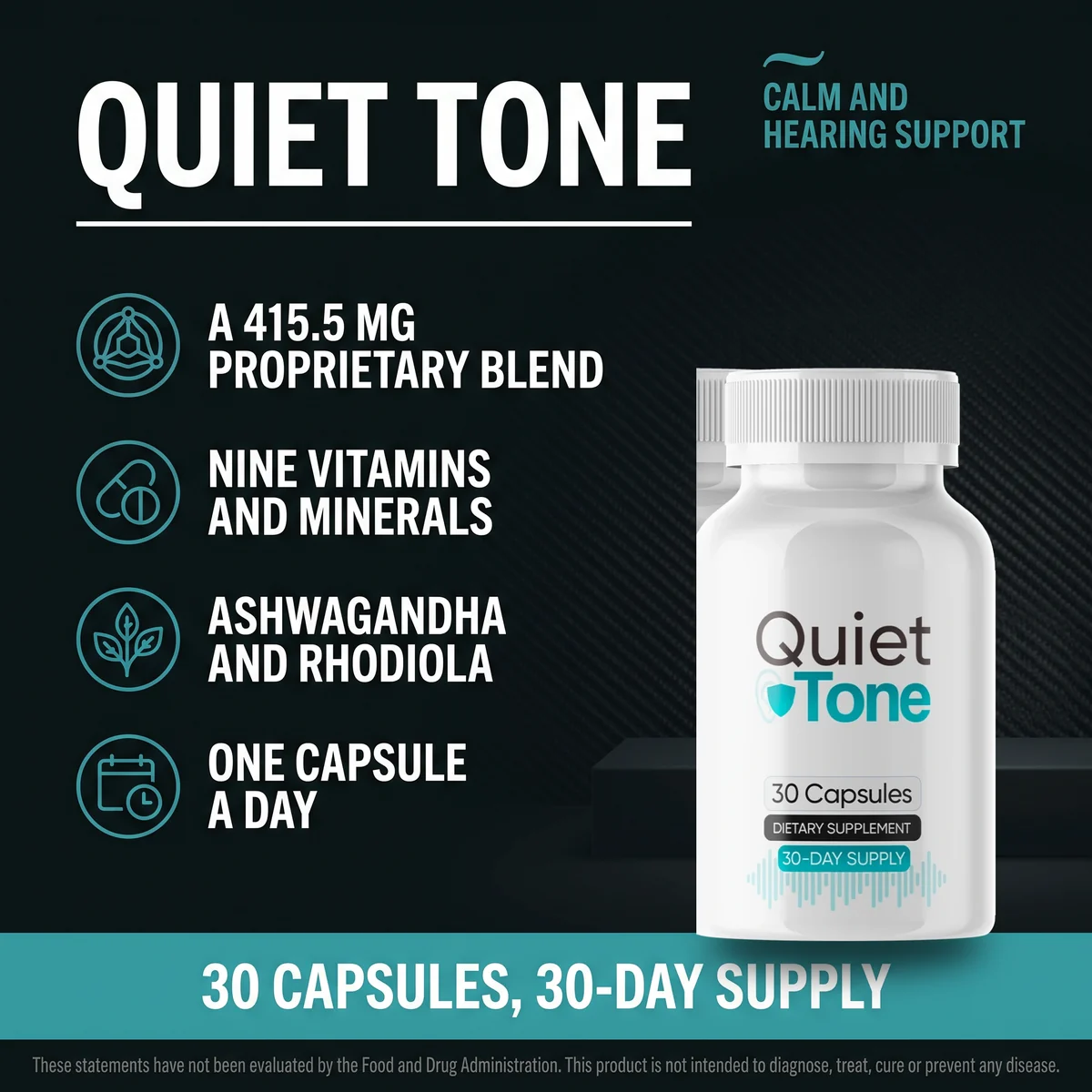
- 415.5 mg is the combined weight of the botanical-and-amino blend, sitting alongside nine vitamins and minerals that are each disclosed individually.
If you have ever wondered why one label line says “proprietary blend” while others give tidy per-nutrient amounts, this takes the format apart and rebuilds it around the QuietTone label.
What is a proprietary blend, exactly?
A proprietary blend is a labeling format in which two or more ingredients are grouped and reported as a single combined weight, rather than each carrying its own disclosed dose. The word “proprietary” signals that the maker treats the specific recipe — the exact ratio of ingredients — as its intellectual property. You see the blend's name, its total milligrams, and a list of the ingredients; what you do not see is a number beside each one. Everything else on the panel is decoded in how to read a Supplement Facts label.
Two facts sit underneath that. First, the total is genuine — the real combined weight of everything in the blend. Second, the order is meaningful, because rules require ingredients within a blend to be listed in descending order by weight: the first name is present in the largest amount, the last in the smallest.
What does the blend total actually tell you?
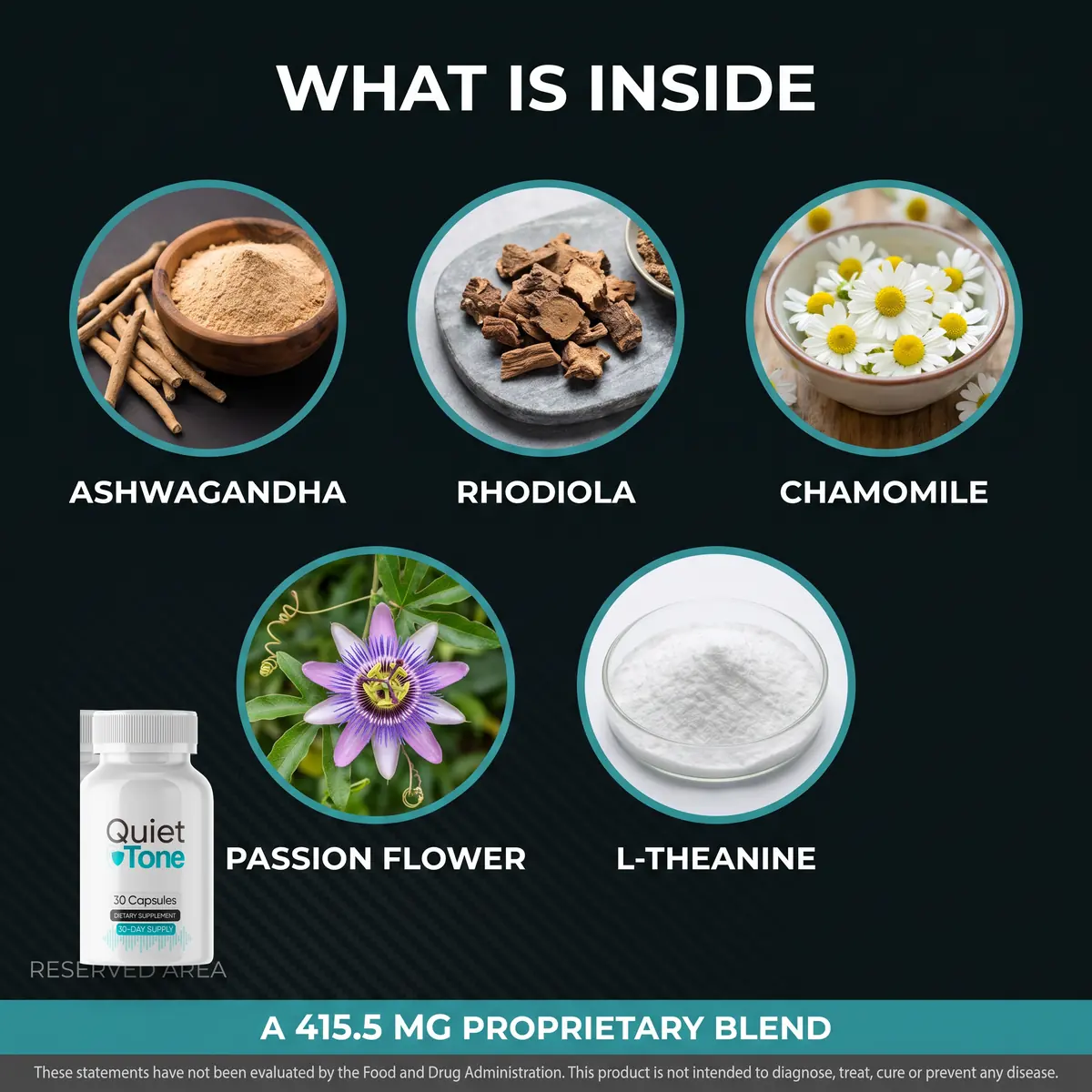
The blend total tells you the overall weight of the group and, read with the ordered ingredient list, the rough hierarchy of what is inside. In QuietTone's case, the 415.5 mg figure is the combined weight of the botanical and amino-acid ingredients — ashwagandha, rhodiola, chamomile, lemon balm, GABA and L-theanine — in one once-daily capsule. It lets you compare one blend's scale against another.
What the total cannot do is hand you the milligrams of any one ingredient. You know ashwagandha leads the list if it is printed first, but not whether it is 200 mg or 60 mg of the 415.5. That one limitation is the whole reason the debate over blends exists. A Journal of Nutrition analysis of label-derived supplement databases describes the same problem from the research side: undisclosed blend amounts limit what anyone can calculate from a label (Saldanha 2018, PMID 31505680).
| The label shows | Can you read it from a blend? |
|---|---|
| Total combined weight of the group | Yes — it is printed (e.g. 415.5 mg) |
| Every ingredient's name | Yes — all must be listed |
| Which ingredient is most present | Yes — it is listed first |
| Which ingredient is least present | Yes — it is listed last |
| Exact milligrams of one ingredient | No — only the group total is disclosed |
| Whether a dose matches a study | Not directly — the per-ingredient figure is hidden |
Proprietary blend vs disclosed dose: what is the difference?
A disclosed-dose label states the exact amount of every single ingredient, while a proprietary blend reports one combined total for the whole group. Both are legal. The difference is transparency versus recipe protection: a disclosed dose lets you line each ingredient up against the amount used in research, while a blend keeps the precise ratio private — which some makers value, because a distinctive formula is easy to copy once every number is public.
Neither format is automatically “good” or “bad.” The format is a clue, not a verdict — what matters is ingredient quality, an honest list, and whether the brand names everything it uses. Those judgements sit inside the wider process we describe in how to choose a hearing support supplement.
Where does QuietTone sit on that spectrum?
QuietTone uses a hybrid layout common among well-built formulas: the nine vitamins and minerals each carry their own disclosed amount and % Daily Value, and only the botanical-and-amino group is presented as the 415.5 mg blend. The parts with official reference values are shown in full; the traditional-use botanicals are grouped. Every ingredient is named — the transparency floor any buyer should insist on.

See the exact blend on the label
See the exact dose layout in QuietTone — nine disclosed vitamins and minerals plus the 415.5 mg botanical blend, in one once-daily capsule. The six-bottle bundle is best value at $49 per bottle, with free U.S. shipping and a 60-day guarantee.
Check today's QuietTone pricing — from $49/bottleIs a proprietary blend legal and safe?
Proprietary blends are fully legal under U.S. supplement-labeling rules, which require the blend's total weight to be shown and its ingredients listed in descending order by amount. The format itself says nothing about safety; that depends on which ingredients are used, at what doses, and whether they suit you. A blend of gentle, traditionally used botanicals is a very different proposition from one built around aggressive stimulants, even though both wear the same label. For a worked example of judging one named ingredient inside a blend, see does ashwagandha really work.
Who should check with a doctor first?
The safe move is the same for any format: read the list, look up anything unfamiliar, and check with your doctor or pharmacist before adding a supplement — especially if you are pregnant or nursing, under 18, taking medication, or managing a condition. The label is a starting point for that conversation, not a substitute.
How do you read a proprietary blend label, step by step?
Reading a blend label well is a five-step habit that turns an opaque line into useful information. Work through it in order:
- Find the disclosed nutrients first. Vitamins and minerals with a Daily Value are usually listed individually, above any blend.
- Read the blend name and its total. Note the combined weight — for QuietTone, 415.5 mg — as your sense of scale.
- Read the ingredients in order. They run from most to least by weight, so the first names carry the formula.
- Look up the leaders. Research the first two or three ingredients — they make up the bulk of the blend.
- Check that everything is named. A blend that hides ingredient names, not just doses, is the real red flag.
Applied to QuietTone, that habit reads cleanly: disclosed vitamins and minerals up top, a clearly named 415.5 mg botanical blend below, each herb and amino acid spelled out. For the ingredient-by-ingredient tour, see our guide to the best nutrients for hearing and calm.
When is a proprietary blend a red flag — and when is it fine?
A proprietary blend becomes a warning sign when it hides something rather than protects a recipe.
What is “fairy-dusting”?
Fairy-dusting is the classic tell: a formula that leads with a cheap filler and buries the impressive-sounding active at the very end of the list, where only a trace can legally remain. Because the order reveals the hierarchy, the trick is visible if you read to the last name. A blend is reasonable, by contrast, when the leaders are ones you would want most of, every component is named, and the total is honest. Use the comparison below as a gut check.
| Reassuring sign | Possible red flag |
|---|---|
| Every ingredient is named | Ingredients hidden behind a vague name |
| Sensible leaders at the top of the list | A cheap filler leading the list |
| An honest, stated blend total | No total weight shown at all |
| Disclosed vitamins/minerals shown separately | Everything swept into one opaque blend |
| Realistic, non-hyped claims | Miracle language with no ingredient support |
Why do companies use proprietary blends at all?
Companies use proprietary blends mainly to protect a formula they consider distinctive, keeping a specific ratio of ingredients from being copied line-for-line by a competitor. Grouping several small botanical amounts under one total can also keep a panel readable. The honest trade-off is less granular information — which is why the better brands offset it by naming every ingredient, publishing the blend total, and keeping the ordered list truthful. For a broader tour of label literacy, see how to support healthy hearing naturally.
Frequently asked questions
What is a proprietary blend?
A proprietary blend is a group of ingredients listed together on a supplement label under one combined weight, without disclosing the individual dose of each ingredient. The blend total is real and the ingredients are ordered by amount, but you cannot tell exactly how many milligrams of each one you are getting.
Is a proprietary blend legal and safe?
Yes. Proprietary blends are permitted under U.S. FDA labeling rules, which require the blend's total weight and its ingredients listed in descending order by amount. Safety depends on the ingredients and doses used, not on whether the format is a blend or a fully disclosed panel. Speak with your doctor before adding any supplement.
What does the 415.5mg figure on QuietTone mean?
The 415.5mg is the combined weight of all the botanical and amino-acid ingredients in QuietTone's calm-and-hearing blend, such as ashwagandha, rhodiola, chamomile, lemon balm, GABA and L-theanine. It is the total for the group, not the dose of any single ingredient within it.
How do I read a proprietary blend label?
Read the blend name and its total weight first, then read the ingredient list underneath, which is ordered from most to least by weight. The first-listed ingredient makes up the largest share and the last-listed the smallest. Vitamins and minerals with a Daily Value are still listed individually above the blend.
What is the difference between a proprietary blend and a disclosed dose?
A disclosed-dose label states the exact milligrams of every single ingredient, so you can compare it against research. A proprietary blend gives one combined total for the group. Both are legal; a disclosed dose offers more transparency, while a blend protects a formula's specific recipe.
Why do companies use proprietary blends?
Companies use blends to protect a formula they consider distinctive and to keep a specific ratio of ingredients from being copied exactly. The trade-off is less transparency for the customer. Reputable brands offset this by naming every ingredient, showing the blend total and keeping the ingredient list honest.
See the exact dose layout in QuietTone →
QuietTone is a dietary supplement, not a treatment for any medical condition. These statements have not been evaluated by the Food and Drug Administration. This product is not intended to diagnose, treat, cure or prevent any disease. Always consult a qualified healthcare professional about your individual needs.
References & further reading
- U.S. Food & Drug Administration. Dietary Supplement Labeling Guide, Chapter IV: Nutrition Labeling. fda.gov — dietary supplement labeling guide
- National Institutes of Health, Office of Dietary Supplements. Dietary Supplements: What You Need to Know. ods.od.nih.gov/factsheets/WYNTK-Consumer
- National Center for Complementary and Integrative Health (NCCIH). Using Dietary Supplements Wisely. nccih.nih.gov/health/using-dietary-supplements-wisely
- Saldanha LG, et al. Characteristics and challenges of dietary supplement databases derived from label information. The Journal of Nutrition, 2018. PMID 31505680
- Examine.com. How to read a supplement label. examine.com/guides/how-to-read-a-supplement-label
These references describe labeling and ingredients generally and are not evidence that any product treats, cures or prevents disease.
Keep reading: best nutrients for hearing and calm · the QuietTone review · the QuietTone blog.