How to read a Supplement Facts label: the QuietTone example

Updated September 2026 · reviewed by the QuietTone Research Team. We are an independent information resource, not a medical provider, and this article is educational rather than medical advice.
Learning how to read a Supplement Facts label means understanding five things at a glance: the serving size, each dietary ingredient and its amount, the percent Daily Value (%DV) where one exists, the asterisks that mark ingredients with no established Daily Value, and the Other Ingredients listed below the line. Once you can read those, you can compare any two products honestly — and this guide uses the real QuietTone panel to show you how.
How to read a Supplement Facts label, top to bottom, in one place.
- Start at the top
- Read the serving size first — every amount and %DV in the box is per serving, so it sets the meaning of every number beneath it.
- Amount & %DV
- Each ingredient shows an amount per serving; the %DV tells you how much of a daily reference intake that amount supplies. Around 20% is high, under 5% is low.
- Mind the asterisks
- An asterisk († or *) means no Daily Value has been established — common for botanicals. It is normal, not a warning.
- Read below the line
- Other Ingredients reveal the capsule type, fillers and possible allergens — often the most decision-relevant part.
The panel is not marketing copy; it is a legally standardised box that must state what is inside and how much. Below we decode each part, then read the QuietTone label as a worked example.
What is a Supplement Facts label?
A Supplement Facts label is the standardised box the U.S. Food and Drug Administration requires on every dietary supplement, listing the serving size, the dietary ingredients and their amounts, the percent Daily Value where one exists, and the Other Ingredients below the line. Because its format is dictated by regulation, it lets you compare any two bottles on the same terms — the front of a pack sells a feeling, but the panel states the facts.
How do you read a Supplement Facts panel step by step?
You read a Supplement Facts panel from the top down, because each line depends on the one above it: the serving size frames the amounts, and the amounts frame the %DV. Work through it in that order and nothing stays ambiguous.
What does the serving size tell you?
The serving size is the amount the manufacturer used as the basis for every number in the panel, so it is the first thing to check — a “2 capsules” label is not comparable to a “1 capsule” label until you adjust for it. QuietTone keeps it simple: the serving is one capsule and a bottle holds a 30-day supply, so every figure is what a single daily capsule delivers.
What does %DV (percent Daily Value) mean?
%DV, or percent Daily Value, tells you how much one serving contributes to a daily reference intake for that nutrient. As a rule of thumb, 20% DV or more is high and 5% DV or less is low. It lets you sanity-check a dose: a mineral at 100% DV delivers a full day's reference amount, while one at 4% DV is a token gesture.
What do the asterisks and “Daily Value not established” mean?
An asterisk beside an ingredient means no Daily Value has been established for it, which is completely normal for botanicals and amino acids such as ashwagandha, chamomile, GABA and L-theanine, because regulators set reference intakes for vitamins and minerals but not for most herbs. It is neither a red nor a green flag; simply judge that ingredient by its milligram amount and the research rather than a percentage.
What counts as “Other Ingredients”?
Other Ingredients are the non-active components listed below the main line: the capsule shell, flow agents, and any fillers or binders — often the most decision-relevant part of the label. It is where you confirm whether the capsule is vegetable-based or gelatin, spot allergens such as soy, dairy, wheat or shellfish, and see additives some shoppers prefer to limit. A short, recognisable list is generally a good sign.
How do you read a proprietary blend?
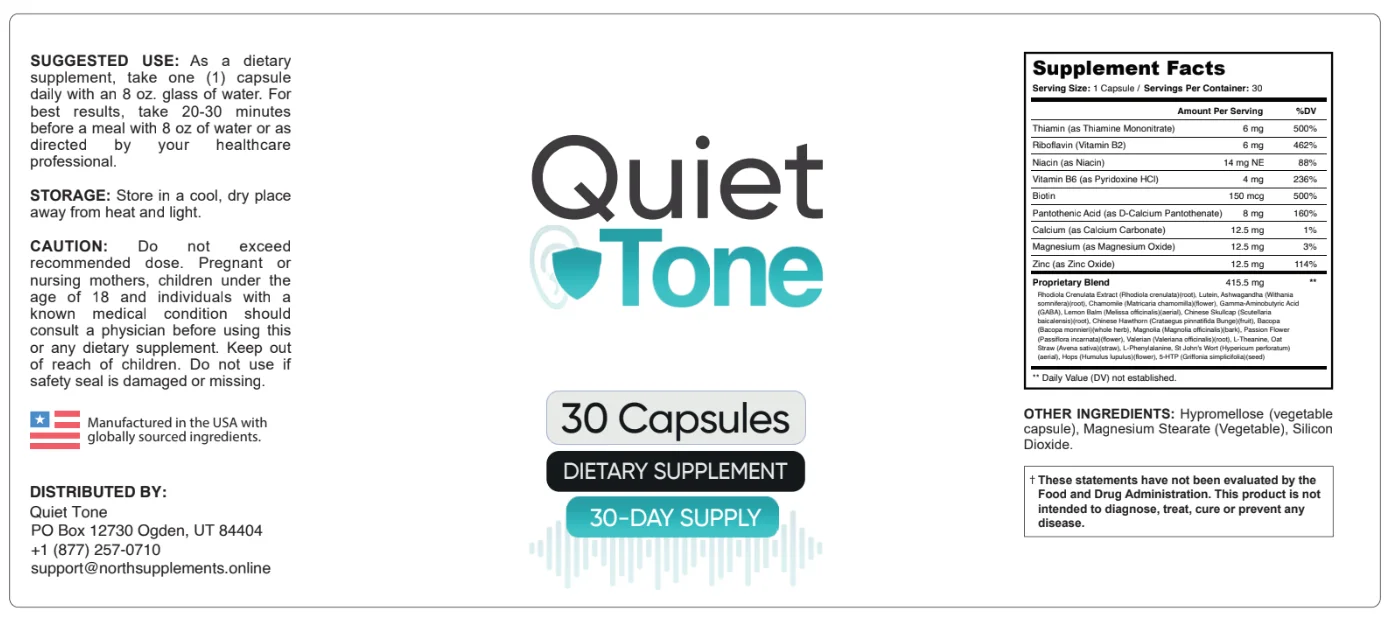
A proprietary blend is a group of ingredients shown under a single total weight, named in descending order of amount but without disclosing each individual dose. So a “415.5 mg calm & hearing blend” tells you the combined weight and which there is most of, but not the exact milligrams of each. Blends are legal and common, yet they make a single dose harder to check against the research, so read one by noting the total, the order, and treating the first-listed ingredients as the largest contributors. A Journal of Nutrition analysis of label-derived supplement databases describes exactly this gap: blends are named but not quantified, which limits what any reader or database can calculate (Saldanha 2018, PMID 31505680).
| Label section | What it tells you | What to check |
|---|---|---|
| Serving size | The basis for every number in the box | How many capsules; how many servings per container. |
| Amount per serving | The dose of each ingredient | Milligrams or micrograms — compare against research. |
| % Daily Value | Share of a daily reference intake | ~20%+ is high, ≤5% is low; asterisk = none established. |
| Proprietary blend | Combined weight of grouped ingredients | Total mg and the descending order of ingredients. |
| Other Ingredients | Inactive components | Capsule type, allergens, fillers and additives. |
See the exact dose in QuietTone →
How does QuietTone's label read in practice?
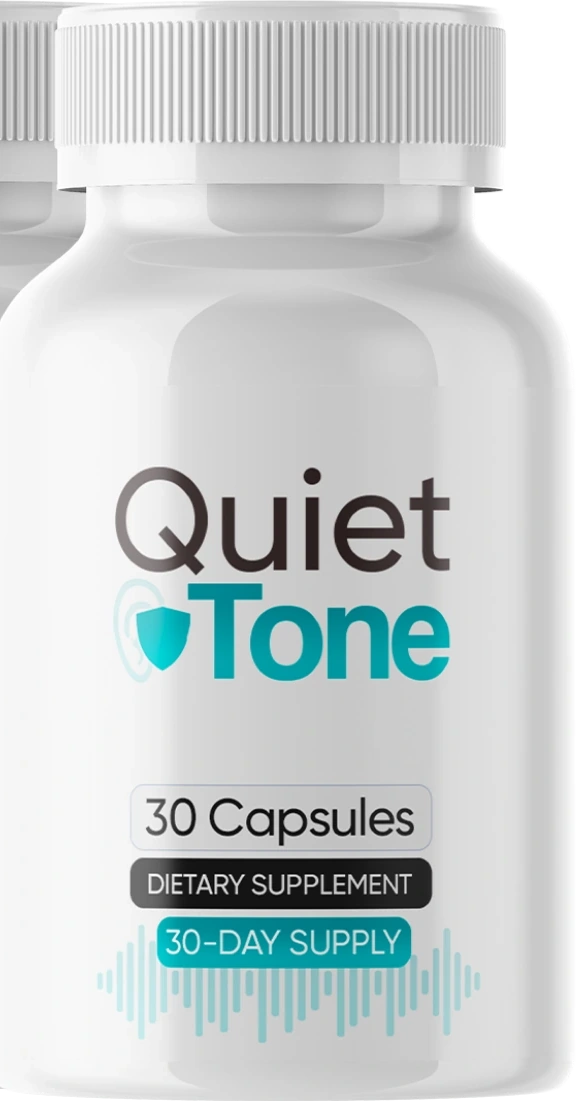
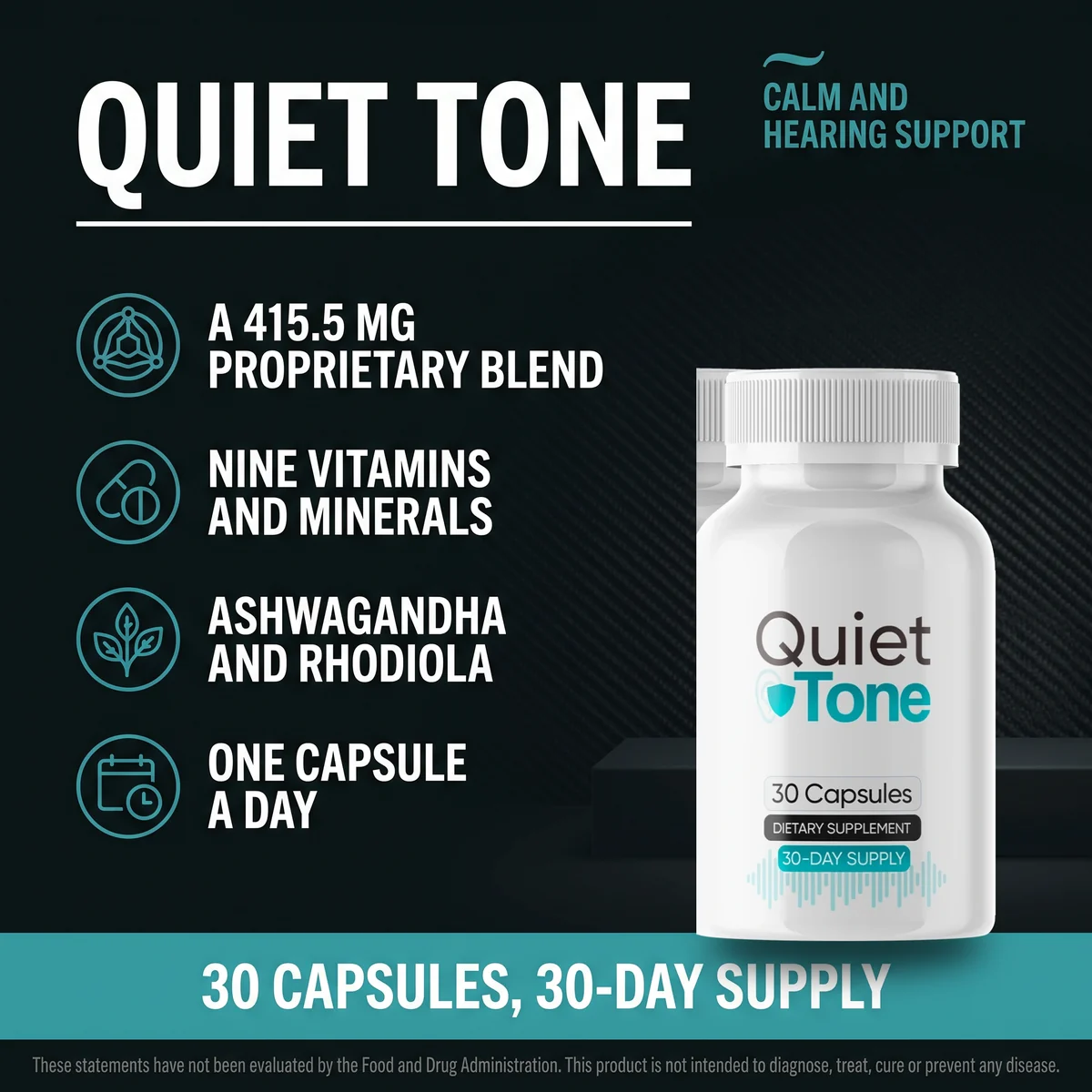
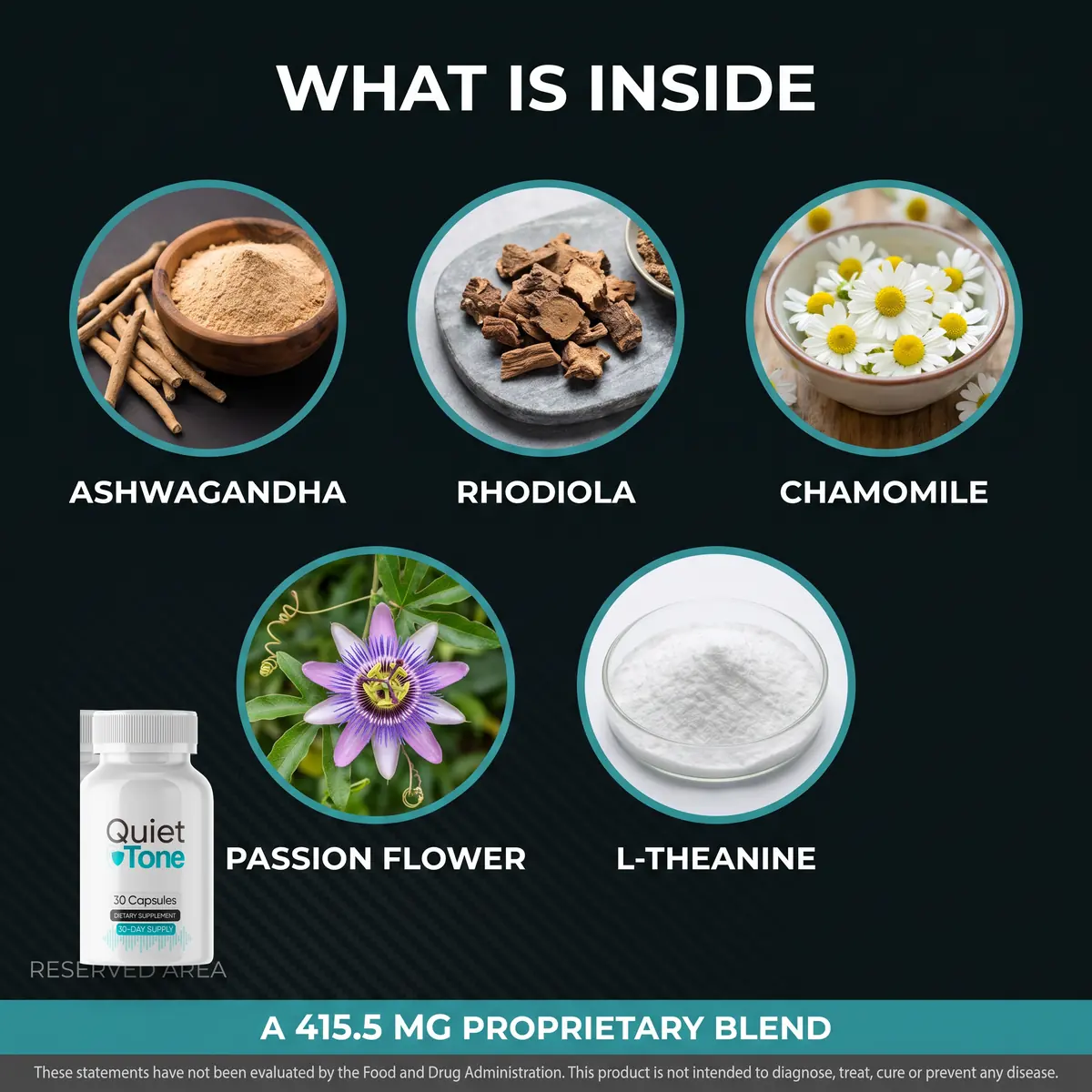
QuietTone's panel reads cleanly once you apply the rules above. The serving size is one capsule; above the line sit nine vitamins and minerals, each with an amount and a %DV; and beneath them is a 415.5 mg botanical blend marked with an asterisk because those herbs and amino acids — ashwagandha, rhodiola, chamomile, lemon balm, GABA and L-theanine — have no established Daily Value. What that missing number means for the headline herb is the subject of does ashwagandha really work.
A careful reader sees disclosed vitamin and mineral doses with %DV, a botanical blend whose total and order are shown (though not each herb's exact milligrams), and a short vegetarian Other Ingredients list. For why these nutrients appear together, see our guide to the best nutrients for hearing and calm, or the role of magnesium in the QuietTone formula.

Read the panel, then check the price
QuietTone pairs nine vitamins and minerals with a 415.5 mg botanical blend in one daily capsule. The six-bottle bundle is the best value at $49 per bottle, with free U.S. shipping and a 60-day guarantee.
Check today's QuietTone pricing — from $49/bottleWhat red flags should you watch for on a label?
The clearest warning signs on a supplement label are missing amounts, everything hidden inside one giant blend, and disease claims the format is not allowed to make. A trustworthy panel states doses you can look up; a weaker one buries them, uses “fairy-dusting” to list a marquee ingredient below its studied dose, or leans on cure-and-treatment language it legally cannot support.
Supplement Facts vs Nutrition Facts — what is the difference?
Supplement Facts and Nutrition Facts are two different FDA-required panels: Nutrition Facts appears on foods and beverages, while Supplement Facts appears on dietary supplements and also lists botanicals and ingredients with no Daily Value.
| Feature | Supplement Facts | Nutrition Facts |
|---|---|---|
| Appears on | Dietary supplements | Foods & beverages |
| Lists botanicals & herbs | Yes, often as a blend | Rarely |
| Ingredients with no Daily Value | Shown with an asterisk | Not typical |
| Serving size set by | Manufacturer (e.g. 1 capsule) | Standardised reference amounts |
| Calories line | Only if meaningful | Always |
| Source of the numbers | Per serving of the supplement | Per serving of the food |
How do you compare two labels quickly?
To compare two supplements fairly, normalise them to the same serving size, then line up the ingredients you care about at their stated amounts:
- Match the serving size — convert both to a per-capsule or per-day basis first.
- Find your key ingredient and compare its amount, not its position on the front label.
- Check the %DV on vitamins and minerals for a meaningful share versus a token amount.
- Read the blends and scan Other Ingredients for capsule type, allergens and additives.
- Divide price by servings for an honest cost per day, then decide.
Run QuietTone through that routine and the read is clear — and the full packages and pricing sit on the homepage.
When should you check with a doctor?
Reading a label helps you choose wisely, but it does not replace professional advice. Speak with your doctor or pharmacist before starting any supplement if you are pregnant or nursing, under 18, take prescription medication, or have a diagnosed condition — and see a clinician promptly for sudden hearing change, ear pain, dizziness, discharge or ringing in only one ear. Bring the panel with you — the amounts and Other Ingredients are what a professional needs to check for interactions.
Frequently asked questions
What is a Supplement Facts label?
It is the standardized box, required by the U.S. FDA, that lists a supplement's serving size, its dietary ingredients with amounts per serving, the percent Daily Value where one exists, and the non-active Other Ingredients below the line.
What does %DV mean on a supplement label?
Percent Daily Value shows how much one serving contributes to a daily reference intake for that nutrient. Around 20% or more is high and under 5% is low; botanicals often show an asterisk because no Daily Value has been established for them.
What is the serving size on a supplement label?
It is the amount the manufacturer used as the basis for every number in the panel — for QuietTone, one capsule. Every listed amount and %DV is per serving, so if you take more you multiply the numbers accordingly.
What are Other Ingredients on a supplement label?
They are the non-active components below the main line — the capsule shell, flow agents and any fillers. It is where you check for allergens, gelatin versus vegetable capsules, and additives you may wish to avoid.
How do you read a proprietary blend on a label?
A proprietary blend lists one total weight for a group of ingredients, then names them in descending order by amount without disclosing each dose. You learn the total and the order, but not the exact milligrams of each ingredient.
Does a Supplement Facts label prove a product works?
No. It tells you what is inside and in what amount, which lets you compare doses against research, but it is not evidence that a product treats, cures or prevents any condition.
Read the QuietTone panel for yourself — risk-free for 60 days →
QuietTone is a dietary supplement, not a treatment for any medical condition. These statements have not been evaluated by the Food and Drug Administration. This product is not intended to diagnose, treat, cure or prevent any disease. Always consult a qualified healthcare professional about your individual needs.
References & further reading
- U.S. Food and Drug Administration. Dietary Supplement Labeling Guide, Chapter IV: Nutrition Labeling. fda.gov/food/dietary-supplement-labeling-guide-chapter-iv
- National Institutes of Health, Office of Dietary Supplements. Dietary Supplements: What You Need to Know. ods.od.nih.gov/factsheets/WYNTK-Consumer
- National Institutes of Health, Office of Dietary Supplements. Magnesium — Fact Sheet for Health Professionals. ods.od.nih.gov/factsheets/Magnesium-HealthProfessional
- National Center for Complementary and Integrative Health (NCCIH). Using Dietary Supplements Wisely. nccih.nih.gov/health/using-dietary-supplements-wisely
- Examine.com. L-Theanine — evidence-based summary. examine.com/supplements/theanine
These references describe supplement labelling in general terms and are not evidence that any product treats, cures or prevents any condition.
Keep reading: the best nutrients for hearing and calm · what causes ringing in the ears · how to support healthy hearing naturally · back to the QuietTone blog · homepage.