Valerian root for rest: the traditional calming botanical in QuietTone

Updated September 2026. We are an independent information resource, not a medical provider, and this article is educational rather than medical advice.
Valerian root (Valeriana officinalis) is a flowering plant whose root has been used for centuries as a traditional rest-and-calm botanical, and it is one of the calming ingredients inside QuietTone's 415.5 mg botanical blend. It does not act on the ear directly; its value in a calm-and-hearing routine is indirect, because a settled evening and better rest tend to make quiet moments feel genuinely quiet.
Is valerian root for rest worth understanding before you buy QuietTone? Here is the honest version.
- What it is
- A European and Asian herb, Valeriana officinalis, whose root is one of the oldest traditional wind-down botanicals — not a drug and not a cure.
- Its hearing role
- Indirect: a calmer, more restful evening can make background ear noise feel less intrusive for some people, rather than changing hearing itself.
- In QuietTone
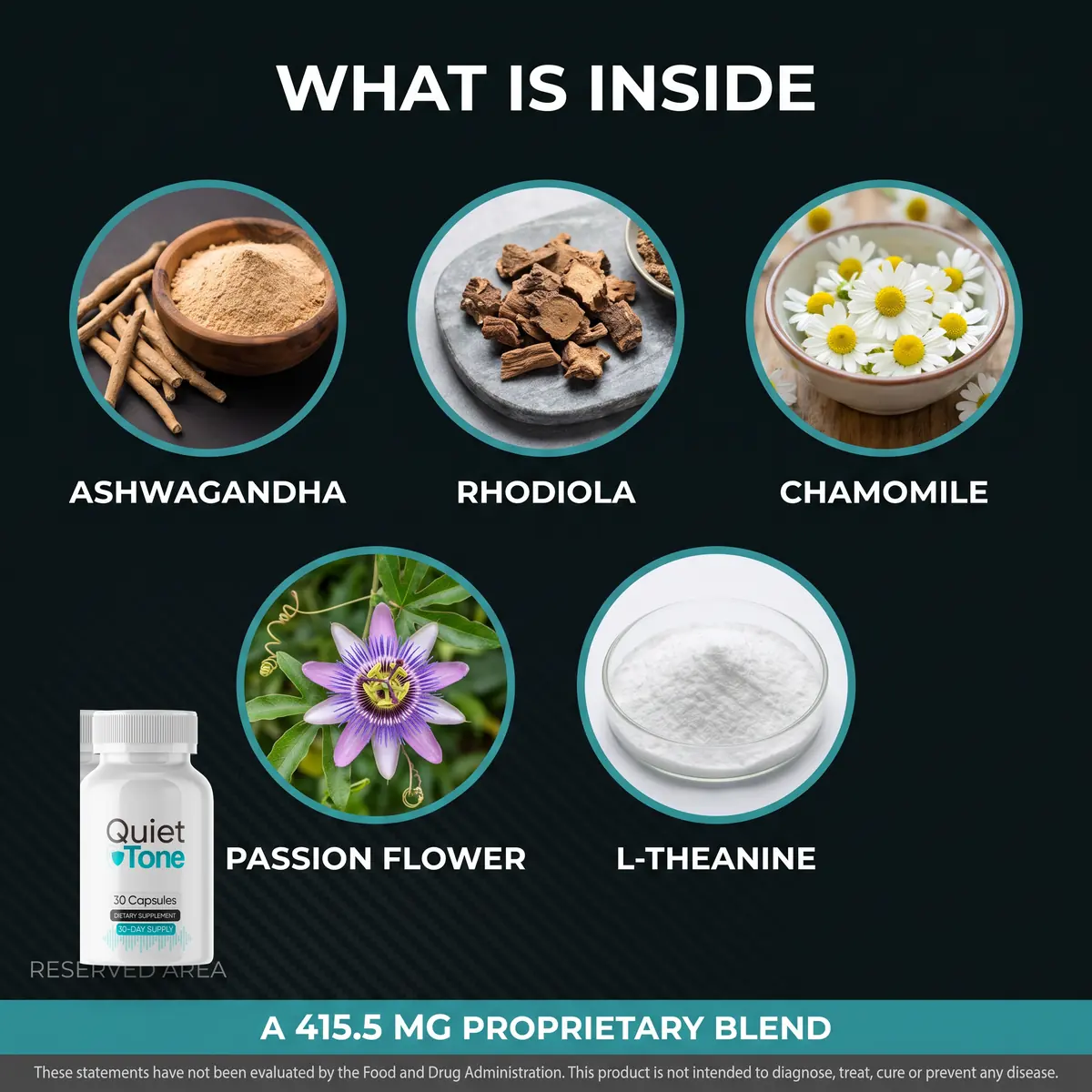
- One of several calming botanicals in a 415.5 mg blend with ashwagandha, rhodiola, chamomile, lemon balm, GABA and L-theanine, plus nine vitamins and minerals.
- Timeframe
- Evidence is mixed; where benefits appear they often build over two or more weeks, and individual results vary widely.
Valerian carries one of the longest traditions of any calming herb, and a research record that is mixed — here is what the root is and why it sits among the wind-down botanicals in QuietTone.
What is valerian root, and why is it in QuietTone?
Valerian root is the underground portion of Valeriana officinalis, a flowering plant native to Europe and parts of Asia, used as a calming herb since the era of ancient Greece and Rome. Herbal writers across the centuries recommended it for restlessness and to ease sleep, and it remains a familiar name on the modern calm-and-sleep shelf.
Why does a rest botanical belong in a hearing supplement?
Because hearing wellness and rest are more connected than they first appear. The most common everyday complaint QuietTone speaks to is not deafness but distraction — a background hum, a restless mind, ears that feel busier after a poor night's sleep. Rest and calm influence how loud that noise feels, so a wind-down botanical earns its place beside nervous-system nutrients. The gentler flower it works alongside is profiled in chamomile in QuietTone.
How does valerian root support rest and relaxation?
Valerian's traditional role is helping the body ease toward rest rather than forcing sleep like a sedative. In the human research the most commonly reported signals appear in self-rated sleep quality and time-to-settle, though results are inconsistent and the herb's reputation runs ahead of its proof.
What do the active compounds do?
The root contains naturally occurring compounds, including valerenic acid and valepotriates, and researchers have looked at how these might interact with the body's GABA calming system. Any effect, where present, is thought to be modest and cumulative. The science is interesting but unsettled, and no reputable summary claims valerian treats a disease. A 2024 umbrella review in European Neuropsychopharmacology looked across the existing valerian meta-analyses and found the evidence for insomnia weak and inconsistent (Valente 2024, PMID 38359657).

What is the connection between rest and hearing wellness?
Rest supports hearing wellness indirectly, by easing the tiredness-and-tension loop that makes ear noise feel louder. The inner ear itself is not “calmed” by a botanical; instead, a well-rested nervous system tends to pay less anxious attention to a background hum, and many describe the same sound feeling smaller after a run of good nights.
So does valerian change my hearing?
No, and it is important not to overstate it. Valerian is not a treatment for hearing loss, tinnitus or any ear condition, and QuietTone is a supplement, not a medicine. For the fuller picture, see our companion piece on what causes ringing in the ears and our guide to the best nutrients for hearing and calm.
See the exact dose in QuietTone →
How much valerian is in QuietTone, and what is it paired with?
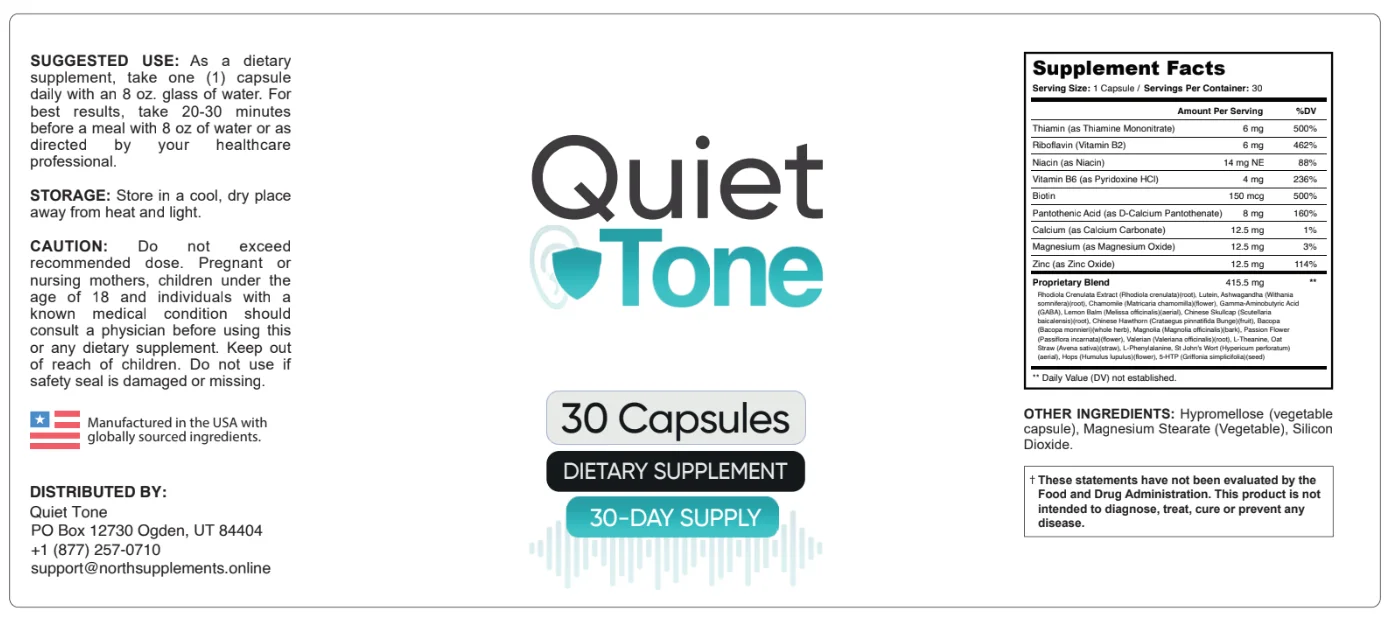
In QuietTone, valerian is one of several calming botanicals in a 415.5 mg proprietary blend rather than a standalone capsule, so the whole works as one relaxation system. Because it is a proprietary blend, valerian's standalone milligram is not broken out separately — the complete panel is on the supplement facts label below.
| Blend partner | Type | Traditional / general role |
|---|---|---|
| Valerian | Rest botanical (root) | Classic wind-down herb, traditionally used to support relaxation and an easier settle at night. |
| Lemon balm | Calming botanical | A gentle traditional herb for a settled, easy-going mood, often paired with valerian. |
| Passion flower | Calming botanical | A long-standing folk relaxant, traditionally combined with valerian and lemon balm. |
| Chamomile | Calming botanical | A classic wind-down herb used for generations for relaxation and restful evenings. |
| Ashwagandha & rhodiola | Adaptogens | Traditionally associated with calm and steady resilience to everyday stress. |
Alongside that blend, QuietTone supplies nine vitamins and minerals — including magnesium and zinc, which contribute to normal nervous-system function — so one daily capsule covers both the calm and the nutritional side. See the full ingredients section for the complete list.

Put your wind-down on autopilot
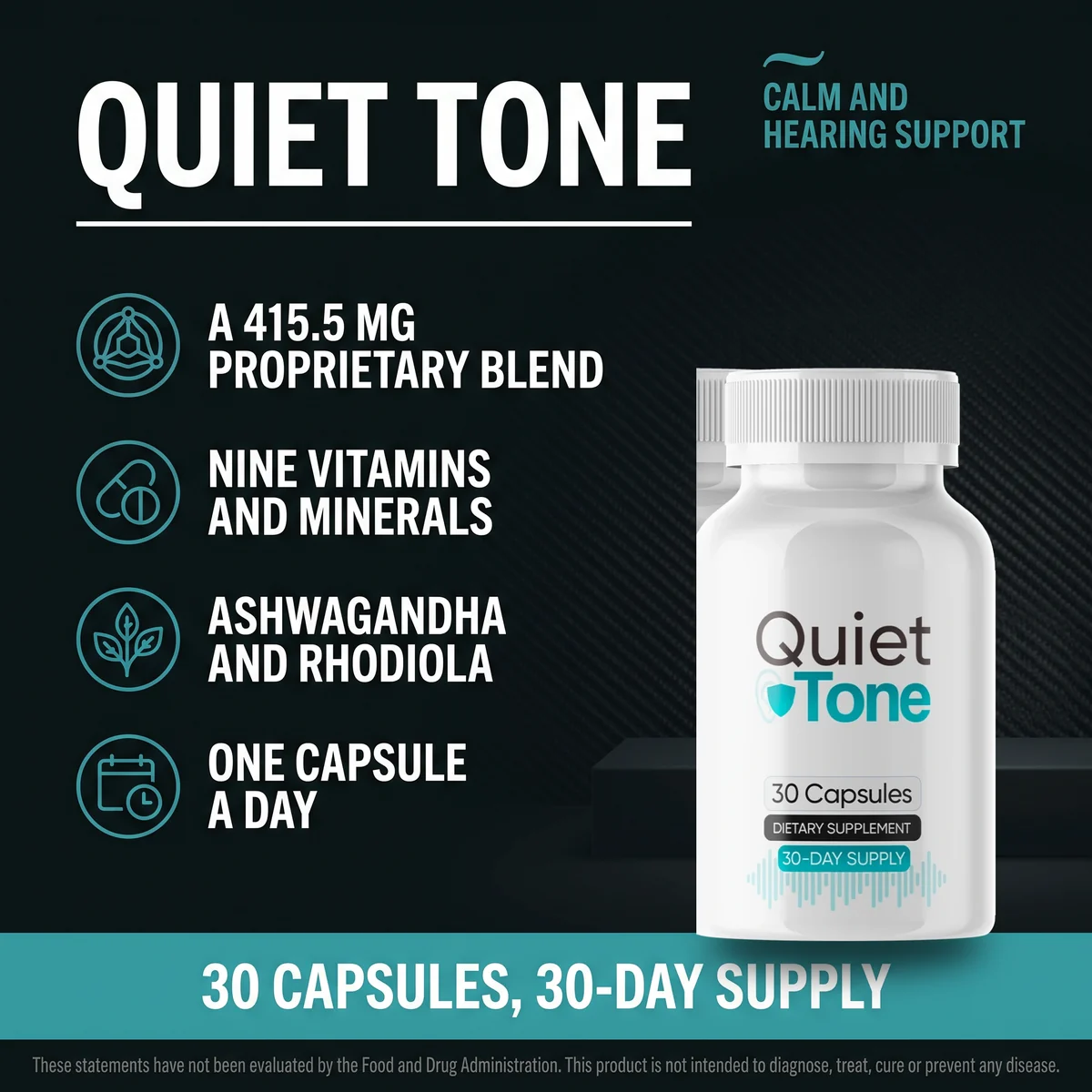
QuietTone is a once-daily capsule pairing a 415.5 mg botanical blend — valerian, lemon balm, passion flower and more — with nine vitamins and minerals. The six-bottle bundle is best value at $49 per bottle, free U.S. shipping, 60-day guarantee.
Check today's QuietTone pricing — from $49/bottleHow does valerian pair with lemon balm and passion flower?
Valerian, lemon balm and passion flower are three classic wind-down botanicals that herbal traditions have combined for generations. A rounded calming character comes from several gentle relaxants together: lemon balm brings an easy-going mood, passion flower a long history as a relaxant, and valerian the deepest rest reputation — all within QuietTone's 415.5 mg blend.
Is the trio better than valerian alone?
Traditional herbalists have long favoured the combination, but evidence for any specific pairing is limited, and QuietTone does not claim the trio outperforms a single herb clinically — it is a rounded blend built on traditional use, not a proven formula. Our guide on how to support healthy hearing naturally sets these botanicals in context.
What does the research actually say about valerian?
The current evidence for valerian is best described as mixed and inconsistent, concentrated in sleep and relaxation studies that vary widely in quality. Independent reviewers such as the National Center for Complementary and Integrative Health note that while valerian is among the most-studied sleep herbs, trials have often been small and their results conflicting, so conclusions should stay measured.
| Area studied | What research suggests | Strength of evidence |
|---|---|---|
| Sleep quality | Some trials report modest improvement in self-rated sleep; others find no clear benefit. | Mixed |
| Everyday relaxation | A traditional relaxant; small studies suggest possible calming effects. | Limited, early |
| Time to settle at night | Occasional reports of easier settling, not consistently confirmed. | Mixed / limited |
| Hearing or tinnitus directly | No reliable evidence of a direct effect on hearing. | Not established |
The honest takeaway: valerian has its strongest reputation exactly where QuietTone positions it — rest and relaxation — even though the clinical picture is mixed, and no meaningful support as a hearing treatment. Hence a supporting botanical, not a remedy.
How do you use valerian for rest day to day?
Valerian tends to work best as a consistent daily habit, because where benefits appear they usually build over time. In QuietTone that is deliberately simple — one capsule, once a day, so valerian and its blend partners reach a steady rhythm:
- Take it consistently — one QuietTone capsule with water, ideally at the same time each day.
- Give it a couple of weeks — assess how you feel over two or more weeks, the window many studies used.
- Stack it with the basics — steady sleep timing, lower evening volume and a wind-down routine do the heavy lifting.
- Keep a light note — jot how your evenings feel, since change is gradual and easy to miss.
- Do not run out mid-routine — because botanicals build slowly, most people choose a multi-month supply.
Who should be cautious with valerian?
Valerian is generally well tolerated by healthy adults in short-term studies, but it is not right for everyone. Some people report mild effects such as headache, dizziness or morning grogginess. It is not recommended during pregnancy or while nursing. Speak with your doctor first if you are under 18, take any medication — especially sedatives, sleep aids or other calming drugs — or live with a liver condition. Because valerian can add to drowsiness, do not combine it with alcohol.
Frequently asked questions
What is valerian root and what is it used for?
Valerian is a flowering plant, Valeriana officinalis, whose root has been used in Europe and Asia for centuries as a traditional rest-and-calm botanical. People have long turned to it in the evening to help wind down. It is a wellness ingredient with a long folk history, not a drug or a treatment for any medical condition.
How much valerian is in QuietTone?
Valerian is one of the calming botanicals inside QuietTone's 415.5 mg proprietary blend, sitting alongside ashwagandha, rhodiola, chamomile, lemon balm, GABA and L-theanine in a single once-daily capsule. Because it is part of a proprietary blend, the standalone milligram is not broken out separately; the full panel appears on the supplement facts label.
Does valerian root help with ringing in the ears or hearing?
Valerian is not a hearing treatment and there is no strong evidence that it changes hearing directly. Its role is indirect: as a traditional rest botanical it may help some people settle in the evening, and calmer, better-rested nights tend to make background ear noise feel less intrusive rather than altering hearing itself.
How long does valerian take to work?
Research on valerian is mixed, and where benefits appear they often build over consistent nightly use rather than after a single dose. Many studies had people take it for two or more weeks before assessing sleep-quality measures. Consistency tends to matter more than any one evening, and individual results vary widely.
Is valerian root safe to take every day?
For most healthy adults, valerian has been generally well tolerated in short-term studies, with mild effects such as headache or morning grogginess reported by some. It is not recommended during pregnancy or nursing, and anyone under 18, taking sedatives or other medication, or with a liver condition should speak with a doctor before starting.
How does valerian pair with lemon balm and passion flower?
Valerian, lemon balm and passion flower are three classic wind-down botanicals that herbal traditions have long combined. In QuietTone the idea is a rounded calming character rather than a single herb doing all the work, so valerian's rest association is complemented by the gentle, settled-mood reputation of lemon balm and passion flower.
Try QuietTone risk-free for 60 days →
QuietTone is a dietary supplement, not a treatment for any medical condition. These statements have not been evaluated by the Food and Drug Administration. This product is not intended to diagnose, treat, cure or prevent any disease. Always consult a qualified healthcare professional about your individual needs.
References & further reading
- National Center for Complementary and Integrative Health (NCCIH). Valerian. nccih.nih.gov/health/valerian
- National Institutes of Health, Office of Dietary Supplements. Valerian — Fact Sheet for Health Professionals. ods.od.nih.gov/factsheets/Valerian-HealthProfessional
- Valente V, et al. Does valerian work for insomnia? An umbrella review of the evidence. European Neuropsychopharmacology, 2024. PMID 38359657
- Examine.com. Valerian — evidence-based summary. examine.com/supplements/valerian
- National Institutes of Health, Office of Dietary Supplements. Magnesium — Fact Sheet for Health Professionals. ods.od.nih.gov/factsheets/Magnesium-HealthProfessional
These references describe the ingredients and habits in general terms and do not constitute evidence that any product treats, cures or prevents any condition.
Keep reading: the best nutrients for hearing and calm · how to support healthy hearing naturally · the full QuietTone review · back to the QuietTone blog.