L-theanine vs GABA for calm: how QuietTone uses both

Updated September 2026 · reviewed by the QuietTone Research Team. We are an independent information resource, not a medical provider, and this article is educational rather than medical advice.
L-theanine and GABA are both calming amino acids, but they are not the same thing: L-theanine is a compound from tea leaves associated with relaxed alertness, while GABA is the body's main inhibitory neurotransmitter, the signal that helps the nervous system settle down. Understanding that difference is the key to reading any calm-support label — and it is exactly why QuietTone chooses to include both rather than pick a side.
L-theanine vs GABA, honestly compared, with where each one fits.
- L-theanine, in one line
- A tea-derived amino acid associated with a calm-yet-focused state — popular for daytime composure without drowsiness.
- GABA, in one line
- The body's principal calming neurotransmitter, linked to winding down; oral GABA's reach to the brain is still debated by researchers.
- Which is “better”?
- Neither, universally — they act differently, so many formulas pair them so the two roles complement each other.
- In QuietTone
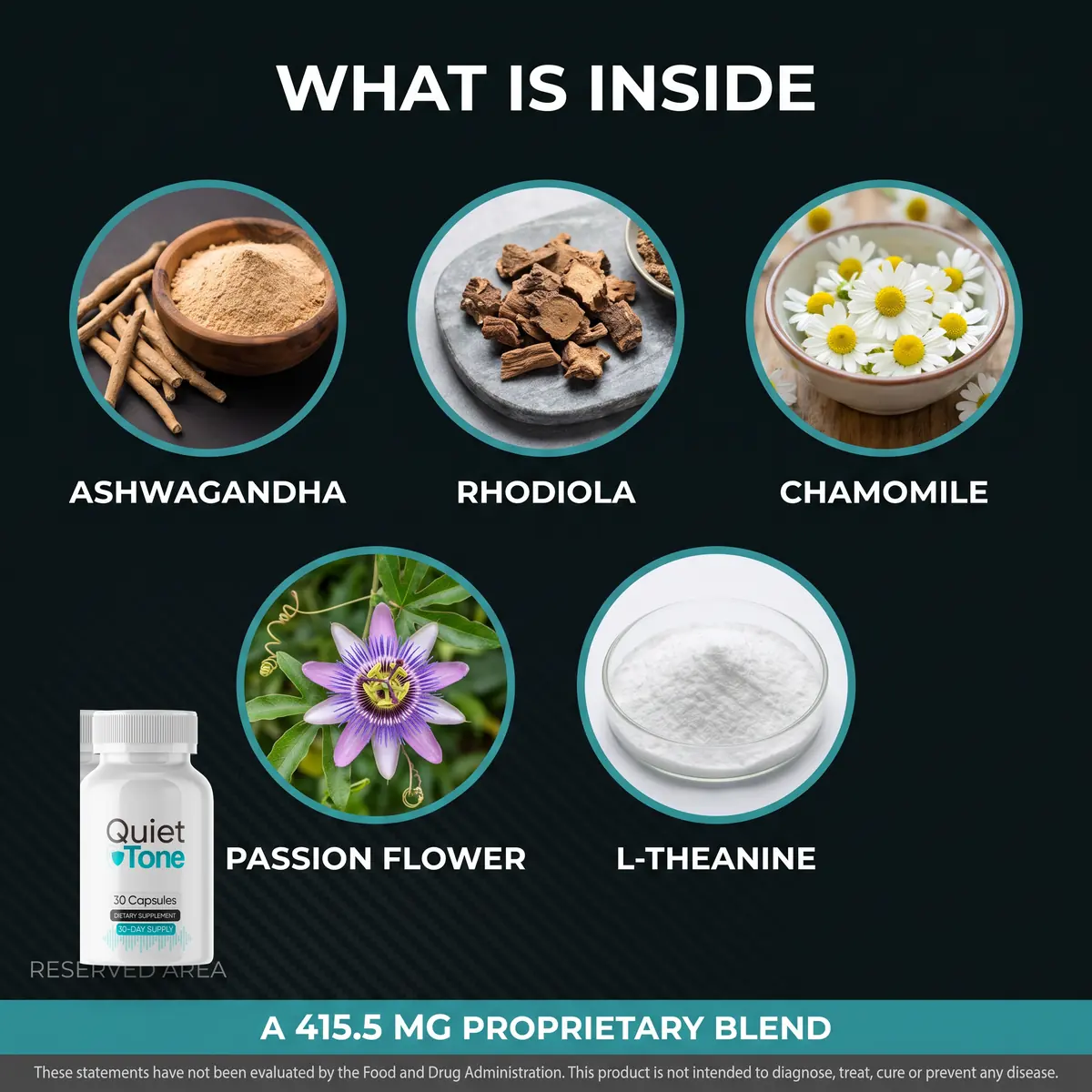
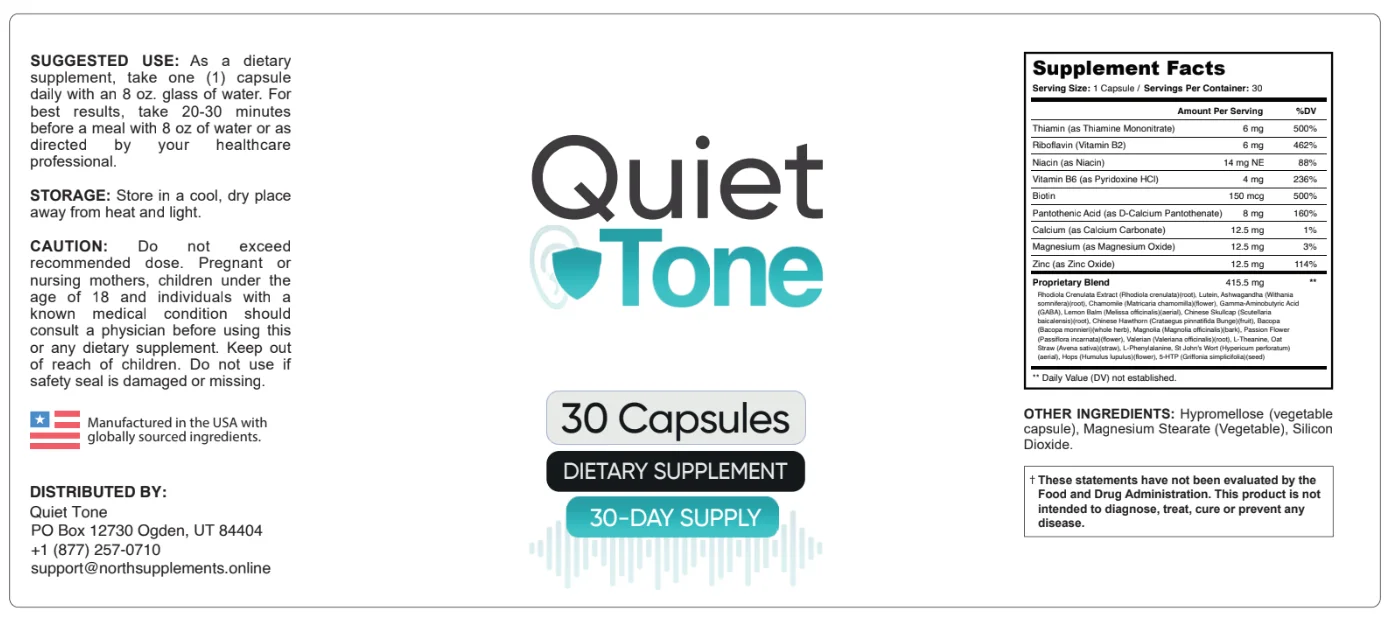
- Both sit inside a 415.5 mg botanical blend with ashwagandha, rhodiola, chamomile and lemon balm, in one daily capsule.
If one supplement lists theanine and another lists GABA, you have met the central question of this guide: are they interchangeable, and if not, which belongs in your routine? The short answer is that they are different tools for a similar goal — and a blend can make more sense than an either-or.
What is the difference between L-theanine and GABA?
The core difference is that L-theanine is a dietary amino acid you consume, while GABA is a neurotransmitter your body already makes to quiet nervous-system activity. L-theanine is a building block associated with a relaxed-but-alert feeling; GABA is a chemical messenger that dials down over-excited signalling between nerve cells. One is an ingredient linked to composure, the other is a molecule linked to switching off — and that distinction shapes how each is used and how confident the science is about them.
What is L-theanine and what is it associated with?
L-theanine is a naturally occurring amino acid found almost uniquely in tea leaves, and it is best known for being associated with calm focus rather than sedation. It is the compound often credited for the smooth, settled feeling of a cup of green tea — present without the jittery edge of caffeine alone. Because that quality is “relaxed but awake,” L-theanine tends to be reached for during the day, when the goal is to feel composed while still getting things done.
Where does L-theanine come from?
L-theanine is concentrated in the leaves of Camellia sinensis, the plant behind green, black and white tea. In supplements it is typically produced to match that natural form, and it is one of the more studied calming ingredients on the market, which is part of why it appears so often in wind-down and focus formulas alike.
What does the research say about L-theanine?
Research on L-theanine is comparatively encouraging for a botanical-adjacent ingredient, with a body of small human studies exploring its links to relaxation and attention, and independent summaries such as those on Examine.com rate its calm-related evidence as among the better-supported. Even so, studies vary in size and quality, effects are typically described as subtle rather than dramatic, and none of this makes L-theanine a treatment for any condition. It is best framed as a well-tolerated ingredient with a reasonable evidence base for everyday calm.
What is GABA and what does it do?
GABA — gamma-aminobutyric acid — is the primary inhibitory neurotransmitter in the human nervous system, meaning its job is to reduce the excitability of nerve cells and help the body shift toward a calmer state. When people talk about “winding down” on a biochemical level, GABA signalling is a large part of what they are describing. As a supplement ingredient, GABA is popular precisely because of that reputation, and it is most often positioned for evening or pre-sleep routines.
Can you get GABA from a supplement?
You can buy GABA as a supplement, but whether swallowed GABA meaningfully reaches the brain is a genuinely open scientific question. The blood-brain barrier is selective, and researchers disagree about how much oral GABA crosses it; some evidence points instead toward effects on the enteric (gut) nervous system. We flag this openly because honest expectation-setting matters more than marketing — the mechanism is not fully settled, and anyone claiming certainty is overstating the science. A 2020 systematic review of oral GABA in Frontiers in Neuroscience found only limited evidence for stress and very limited evidence for sleep (Hepsomali 2020, PMID 33041752), while the L-theanine literature is modestly stronger (Williams 2020, PMID 31758301).
What does the research say about GABA?
The evidence for oral GABA is more mixed than for L-theanine, with some small studies reporting relaxation-related outcomes and others finding little, alongside ongoing debate about how it would even work. Resources from the National Center for Complementary and Integrative Health consistently stress that a supplement's popularity is not the same as proof of benefit. GABA remains a widely used, generally well-tolerated ingredient traditionally associated with calm, but the human data are far from conclusive.
| L-theanine | GABA | |
|---|---|---|
| What it is | Amino acid from tea leaves | Inhibitory neurotransmitter the body makes |
| Associated with | Calm focus, relaxed alertness | Winding down, quieting nerve activity |
| Typical timing | Daytime composure | Evening / pre-sleep wind-down |
| Evidence base | Comparatively better studied | More mixed and debated |
| Open question | Effect size tends to be subtle | How much reaches the brain orally |
See the exact dose in QuietTone →
L-theanine vs GABA: which is better for relaxation?
Neither L-theanine nor GABA is universally “better,” because they occupy different niches in a calm routine rather than competing for the same one. L-theanine leans toward daytime calm you can work through, while GABA leans toward evening settling; L-theanine has the steadier evidence base, while GABA carries a more familiar name but a shakier mechanism. Choosing between them is less like picking a winner and more like deciding whether you want a morning tool, an evening tool, or a little of both.
| If your goal is… | Often reached for | Why |
|---|---|---|
| Staying calm and focused at work | L-theanine | Associated with composure without drowsiness. |
| Settling the mind in the evening | GABA | Traditionally linked to winding down. |
| A single everyday calm routine | Both, blended | The two roles are complementary, not duplicated. |
| Evidence-led reassurance | L-theanine first | It has the steadier research base of the two. |

Both amino acids, one capsule
Rather than buying L-theanine and GABA separately, QuietTone brings them together with ashwagandha, rhodiola, chamomile and lemon balm in a 415.5 mg blend. The six-bottle bundle is the best value at $49 per bottle, with free U.S. shipping and a 60-day guarantee.
Check today's QuietTone pricing — from $49/bottleWhy does QuietTone combine both L-theanine and GABA?
QuietTone includes L-theanine and GABA together because their traditional roles complement rather than duplicate one another, giving a single daily capsule both a daytime-composure ingredient and a familiar wind-down one. The two amino acids sit inside a 415.5 mg botanical blend with ashwagandha, rhodiola, chamomile and lemon balm, backed by nine vitamins and minerals such as magnesium and zinc that contribute to normal nervous-system function. The idea is a considered stack for everyday calm and hearing wellness — not one hero ingredient asked to do everything.
To go deeper on each ingredient, see our write-ups on L-theanine in QuietTone and GABA in QuietTone, the guide to the best nutrients for hearing and calm, or the full QuietTone review.
How do you use calming amino acids safely?
The safe way to use any calming amino acid is to treat it as a supporting habit within the label amount, not as a fix for a medical problem. L-theanine and GABA are both generally well tolerated at typical supplement amounts, but that is not the same as “right for everyone.” Take them consistently, pair them with the basics that actually move calm, and give any routine several weeks before judging it.
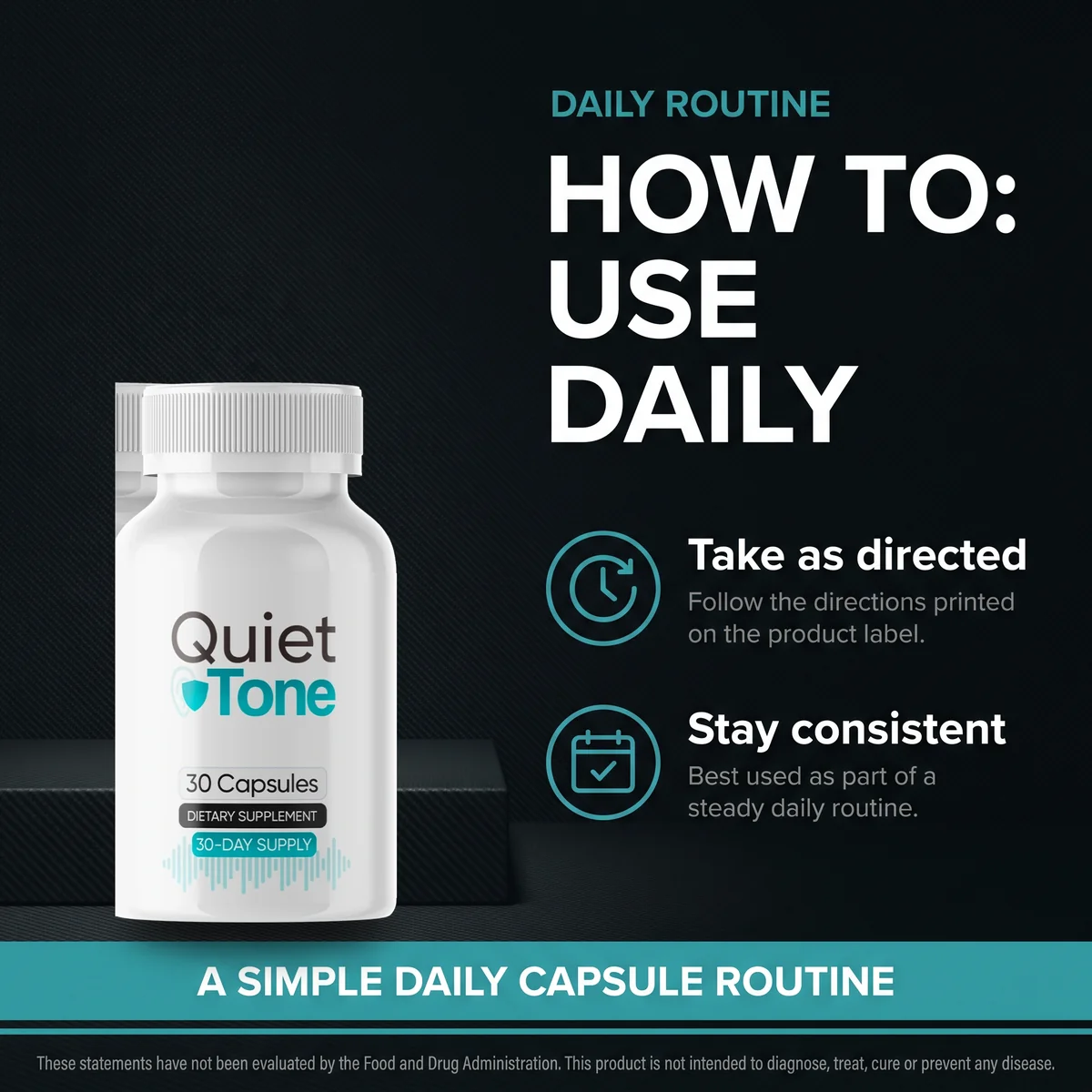
- Keep to the label — for QuietTone, one capsule with water, ideally at the same time each day.
- Stack the fundamentals — sleep, activity and stress habits do the heavy lifting; amino acids support them.
- Be patient — expect subtle, cumulative changes over weeks, not an overnight switch.
- Mind your context — notice how caffeine, alcohol and late screens interact with how calm you feel.
When should you talk to a doctor?
Calming amino acids are for supporting everyday calm in generally healthy people, and they are not a substitute for medical care. Speak with your doctor before starting L-theanine, GABA or any blend if you are pregnant or nursing, under 18, take any medication — especially anything affecting mood, sleep or blood pressure — or have a diagnosed condition. If persistent anxiety, sleeplessness or ringing in the ears is affecting your life, that is a conversation for a professional, not a supplement label.
Frequently asked questions
What is the main difference between L-theanine and GABA?
L-theanine is an amino acid from tea leaves that is associated with a relaxed-but-alert feeling, while GABA is the body's main calming neurotransmitter that helps quiet nervous-system activity. In short, L-theanine is a dietary building block linked to composure, and GABA is a signalling molecule linked to winding down.
Is L-theanine or GABA better for relaxation?
Neither is universally better, because they work in different ways. L-theanine is popular for daytime calm without drowsiness, while GABA is more often used for evening wind-down. Many formulas, including QuietTone, include both so the two can complement each other rather than choosing one.
Can GABA supplements cross the blood-brain barrier?
The extent to which oral GABA reaches the brain is still debated among researchers, and the evidence is mixed. Some studies suggest effects may involve the gut nervous system rather than direct brain uptake. This is an area where the science is genuinely unsettled, so honest expectations matter.
Are calming amino acids safe to take daily?
L-theanine and GABA are widely used as dietary supplements and are generally well tolerated at typical amounts, but they are not a treatment for any condition. If you are pregnant or nursing, under 18, take medication or have a health condition, speak with your doctor before adding them.
Does QuietTone contain both L-theanine and GABA?
Yes. QuietTone pairs L-theanine and GABA with ashwagandha, rhodiola, chamomile and lemon balm inside a 415.5 mg botanical blend, alongside nine vitamins and minerals, in a single once-daily capsule.
Can I take L-theanine and GABA together?
Many supplements combine them, and the pairing is common because their traditional roles are complementary rather than duplicative. As with any supplement, keep to the label amount and check with a healthcare professional if you take medication or have a diagnosed condition.
Try QuietTone risk-free for 60 days →
QuietTone is a dietary supplement, not a treatment for any medical condition. These statements have not been evaluated by the Food and Drug Administration. This product is not intended to diagnose, treat, cure or prevent any disease. Always consult a qualified healthcare professional about your individual needs.
References & further reading
- Examine.com. L-Theanine — evidence-based summary. examine.com/supplements/theanine
- National Center for Complementary and Integrative Health (NCCIH). Health topics & supplements. nccih.nih.gov/health
- Williams JL, et al. The effects of green tea amino acid L-theanine consumption on the ability to manage stress and anxiety levels: a systematic review. Plant Foods for Human Nutrition, 2020. PMID 31758301
- Hepsomali P, et al. Effects of oral gamma-aminobutyric acid (GABA) administration on stress and sleep in humans: a systematic review. Frontiers in Neuroscience, 2020. PMID 33041752
- National Institutes of Health, Office of Dietary Supplements. Dietary Supplements — background information. ods.od.nih.gov/factsheets/DietarySupplements-HealthProfessional
These references describe the ingredients in general terms and do not constitute evidence that any product treats, cures or prevents any condition.
Keep reading: L-theanine in QuietTone · GABA in QuietTone · the best nutrients for hearing and calm · back to the QuietTone blog · homepage.